Posture Corrector

Types and Features

Posture Corrector — Back Support and Correct Posture Formation

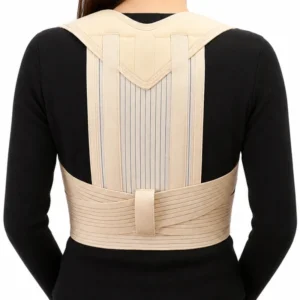
A posture corrector is a soft thoracic spine orthosis used to support the back, reduce slouching and promote correct positioning of the shoulder girdle.

These devices help reduce the load on the back muscles, improve body alignment and ease discomfort associated with prolonged sitting and poor posture.

Posture correctors are used in children, adolescents and adults during rehabilitation, for postural disorders and increased load on the thoracic spine.

Our center provides:

  • free orthopedic consultation;
  • corrector selection based on diagnosis and individual patient needs;
  • assistance with obtaining the device under the government program;
  • fabrication and fitting of correctors for adults and children;
  • patient support throughout the rehabilitation process.

What is a posture corrector?

A posture corrector is a soft-fixation orthopedic device that helps keep the shoulders and thoracic spine in a more correct position.

Depending on its design, a corrector can:

  • support the thoracic spine;
  • reduce slouching;
  • help keep the shoulders in the correct position;
  • reduce the load on the back muscles;
  • build the habit of correct posture;
  • reduce the feeling of back fatigue;
  • improve comfort during prolonged sitting.

Soft thoracic orthoses do not fully restrict movement and are suitable for everyday activity.

Features of posture correctors

Posture correctors differ from lumbar orthoses and rigid corsets in their softer fixation and focus specifically on supporting the thoracic spine and shoulder girdle.

Key features:

  • soft support without rigid fixation;
  • comfort during prolonged wear;
  • can be worn under clothing;
  • preserved freedom of movement;
  • gradual formation of correct back position.

These orthoses are more commonly used for posture correction and reduction of muscle tension rather than rigid spinal stabilization.

When is a posture corrector prescribed?

A posture corrector may be prescribed for:

🧍

Posture

  • slouching;
  • postural disorders;
  • weak back muscles.
💻

Load and work

  • prolonged sedentary work;
  • discomfort in the thoracic region;
  • increased load on the back.
👦

Children and adolescents

  • school-age children and adolescents;
  • prevention of postural deterioration.
🏥

Rehabilitation

  • during the recovery and rehabilitation period;
  • prevention of condition deterioration.

Types of posture correctors

Types of devices

Soft posture correctors

Used for light support of the thoracic spine and shoulder girdle.

  • suitable for everyday wear;
  • do not restrict movement;
  • comfortable under clothing.

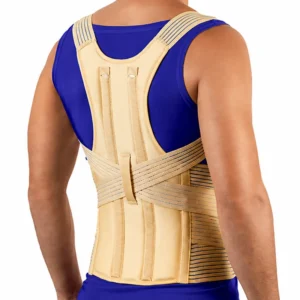
Semi-rigid models

Provide more pronounced back support through additional fixation elements.

  • more pronounced stabilization;
  • suitable for marked slouching;
  • recommended by specialist prescription.

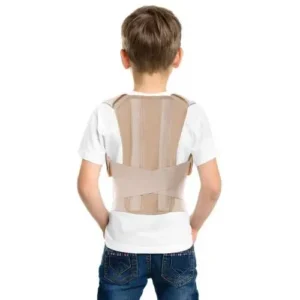
Children’s posture correctors

Made to account for children’s anatomical features and used during posture development.

  • account for growth features;
  • soft and comfortable to wear;
  • fitted by age and size.

Which posture correctors do we fabricate?

Custom fabrication tailored to each patient’s individual needs

✅ What we fabricate

Our center fabricates:

  • soft posture correctors;
  • soft thoracic spine orthoses;
  • models for adults and children.

✅ How our devices help

These devices help to:

  • maintain correct back alignment;
  • reduce slouching;
  • decrease muscle load;
  • improve comfort during sitting and walking.

How is a posture corrector selected?

Selection of the device depends on a number of individual parameters that a specialist evaluates during examination.

The selection takes into account:

  • patient’s age;
  • degree of postural disorder;
  • level of physical activity;
  • anatomical features;
  • required level of support.

During the consultation the specialist assesses the condition of the spine and determines the most suitable model and degree of fixation.

Free orthopedic consultation

A free orthopedic consultation is available at our center.

The specialist will:

  • perform an examination;
  • assess the condition of posture;
  • determine whether a corrector is needed;
  • select the appropriate model;
  • provide recommendations on wearing;
  • advise on obtaining the device under the government program.

That is why selection must be carried out by a specialist.

Posture corrector — price in Ukraine

The cost of a posture corrector depends on: design, support level, materials, size, and individual fabrication features.

Approximate cost of posture correctors in Ukraine

Soft posture correctors

  • soft correctors — from UAH 1,800.

Semi-rigid models

  • semi-rigid models — from UAH 3,500.

Free provision of posture correctors under the government program

Our center offers free provision of posture correctors under the government rehabilitation aid program.

“All-Ukrainian Center for Rehabilitation and Prosthetics “ZDOROVIA” LLC provides free individual services to persons with disabilities, supplying them with prosthetic and orthopedic devices.

Our work is built on the extensive experience of our European partners, enabling us to produce comfortable and adapted orthopedic devices that fully meet the needs of our patients.

Why is it important to correct posture in time?

Postural disorders can gradually lead to serious consequences for back health. A posture corrector helps keep the back in a more correct position and reduce the load on the thoracic spine during everyday activity.

Without correction, postural disorders can cause:

  • muscle tension;
  • back discomfort;
  • increased fatigue;
  • worsening of slouching;
  • uneven load distribution on the spine.

A posture corrector helps to:

  • keep the back in the correct position;
  • reduce slouching and muscle load;
  • decrease the feeling of back fatigue;
  • improve comfort during sitting and walking;
  • gradually form correct posture.

Frequently Asked Questions about posture correctors (FAQ)

Answers to common questions

At what age is it best to start posture correction?

The earlier a postural disorder is identified, the easier and more effective the correction. It is especially important to monitor posture in children and adolescents during periods of active growth.

Can slouching worsen over time?

Yes. Without correction, postural disorders can progress, especially with a sedentary lifestyle, weak back muscles and constant load on the spine.

What are the health risks of poor posture beyond appearance?

Poor posture can lead to: chronic muscle tension, back and neck pain, rapid fatigue, discomfort during prolonged sitting, and uneven load distribution on the spine.

Can posture be corrected in an adult?

Yes. In adults correction usually takes more time, but the right orthosis, exercises and load management help improve back alignment and reduce discomfort.

Does a posture corrector help when working at a computer?

Yes. A corrector helps maintain better body alignment and reduce the load on the thoracic spine and back muscles during prolonged sitting.

Can a posture corrector cause discomfort?

In the first few days of use, an unfamiliar sensation of muscle and shoulder support may be felt. Adaptation usually occurs gradually.

Should exercises be done alongside a posture corrector?

Yes. Maximum effect is achieved by combining a posture corrector with back muscle strengthening and following the specialist’s recommendations.

Can an incorrect posture corrector cause harm?

Yes. An overly rigid or incorrectly fitted model can cause discomfort and fail to provide the necessary support.

Does a posture corrector help with pain between the shoulder blades?

In many cases — yes. A corrector helps reduce tension in the thoracic muscles and improve back alignment.

How can I tell if a posture corrector has been fitted correctly?

A correctly fitted corrector supports the back and shoulders without strong pressure, breathing restriction or marked limitation of movement.

Get a Consultation

If you need an orthosis for the knee, ankle, wrist or lumbar spine — contact our center.

👉 Book a free orthopedic consultation and get help with selecting and obtaining an orthosis under the government program.