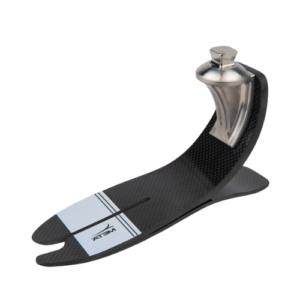
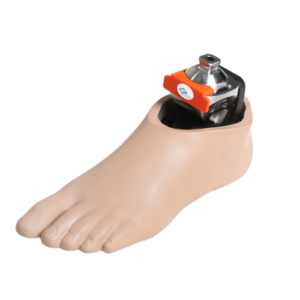
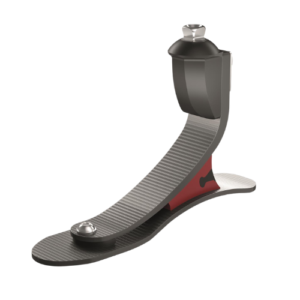
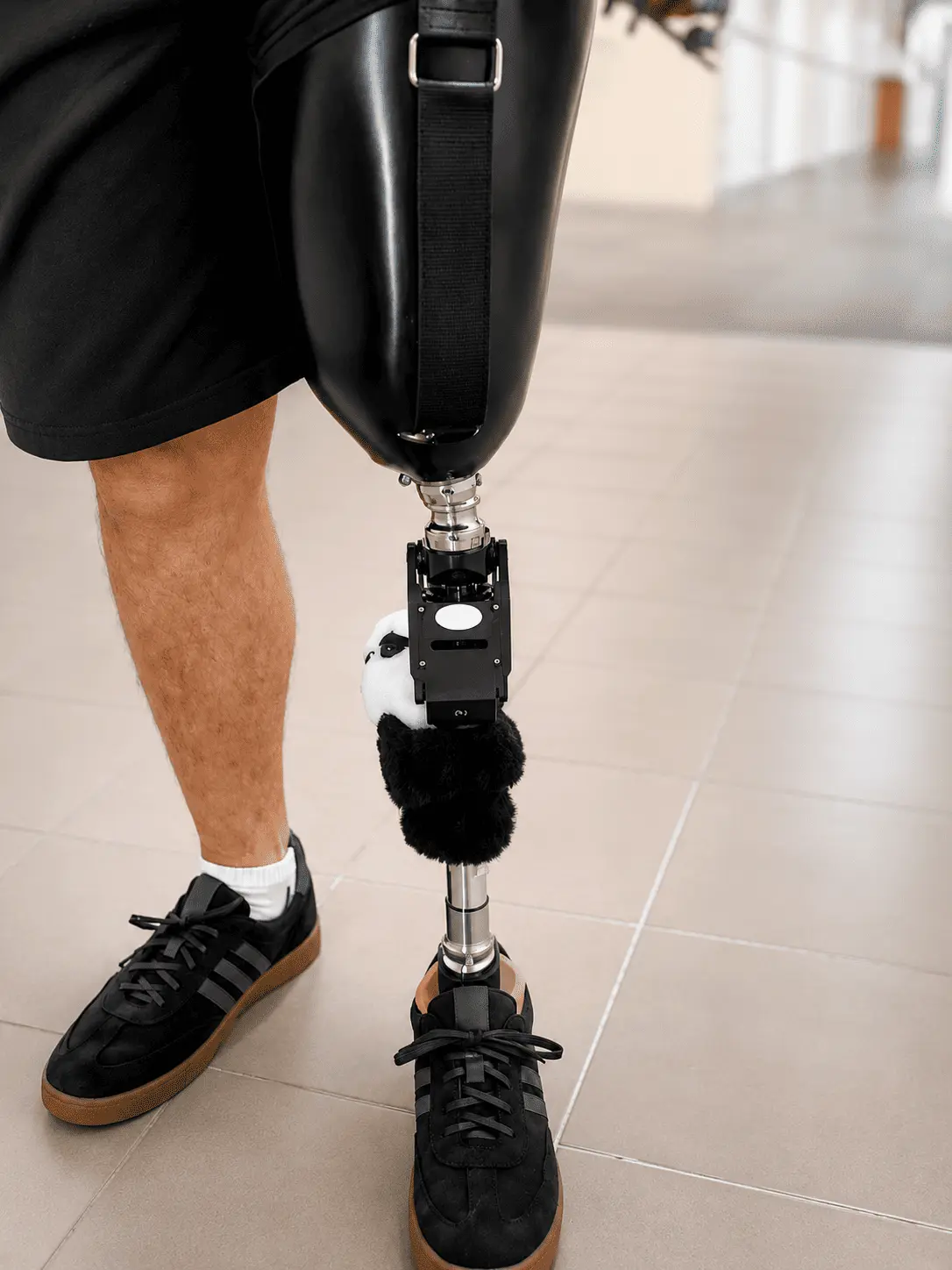
Prosthetics after a Chopart amputation
A Chopart amputation is one of the most complex types of partial foot amputation. At this level of amputation the hindfoot is preserved, but the person loses the midfoot and forefoot, which significantly affects walking biomechanics.
Without proper prosthetics, gait disturbance gradually develops, the load on the ankle, knee and hip joints increases, and the risk of contractures and secondary deformities grows.
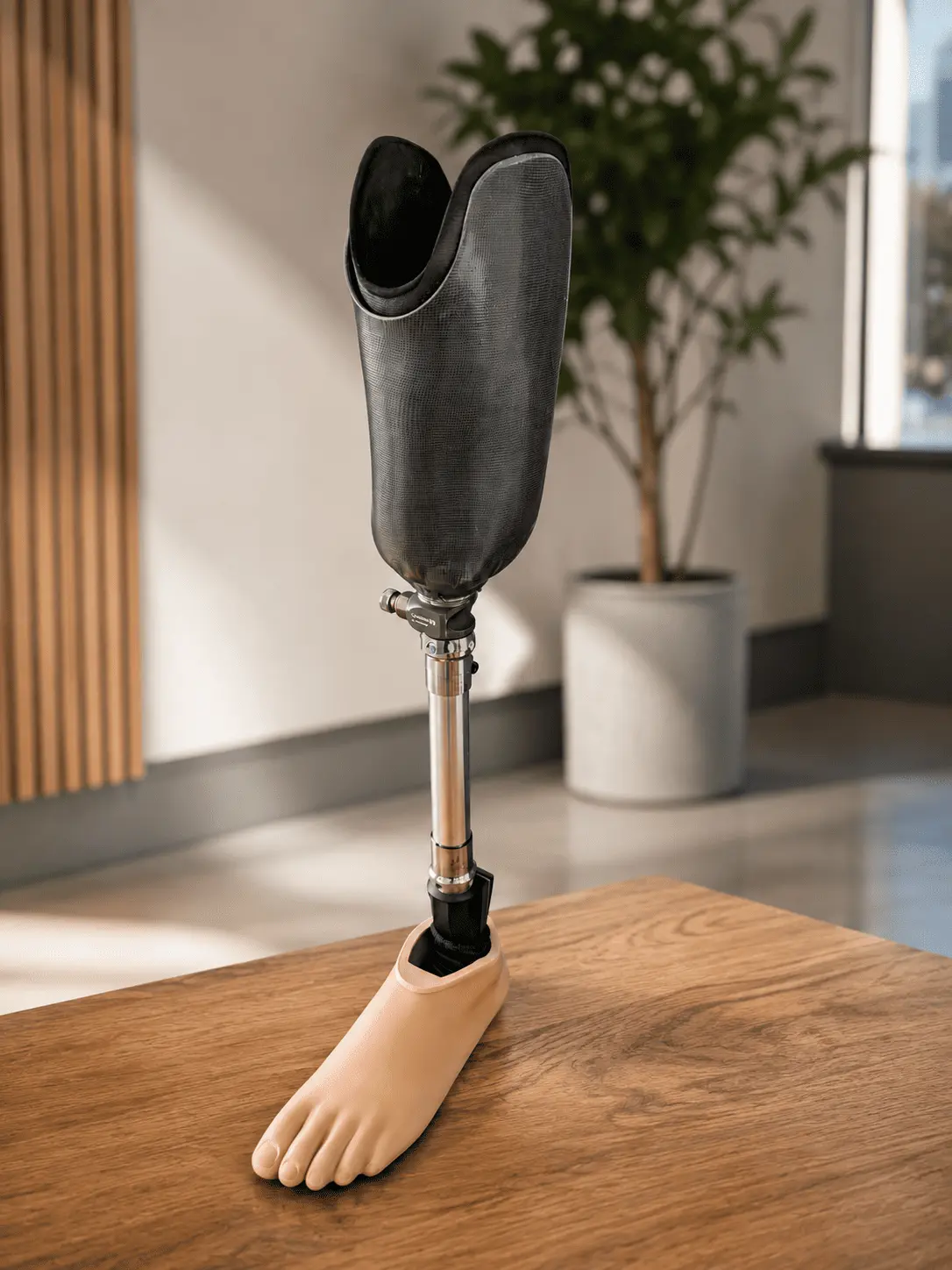
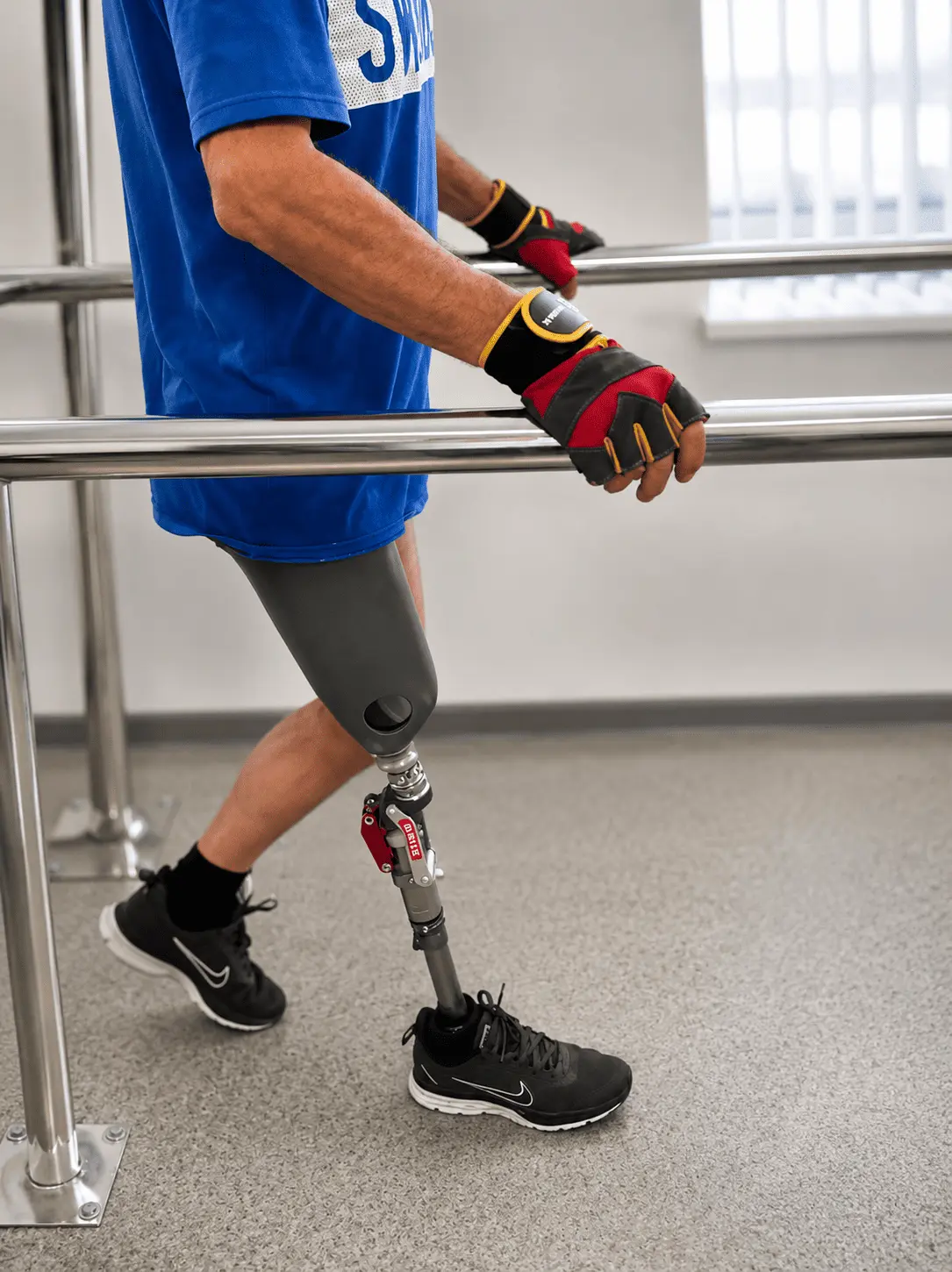
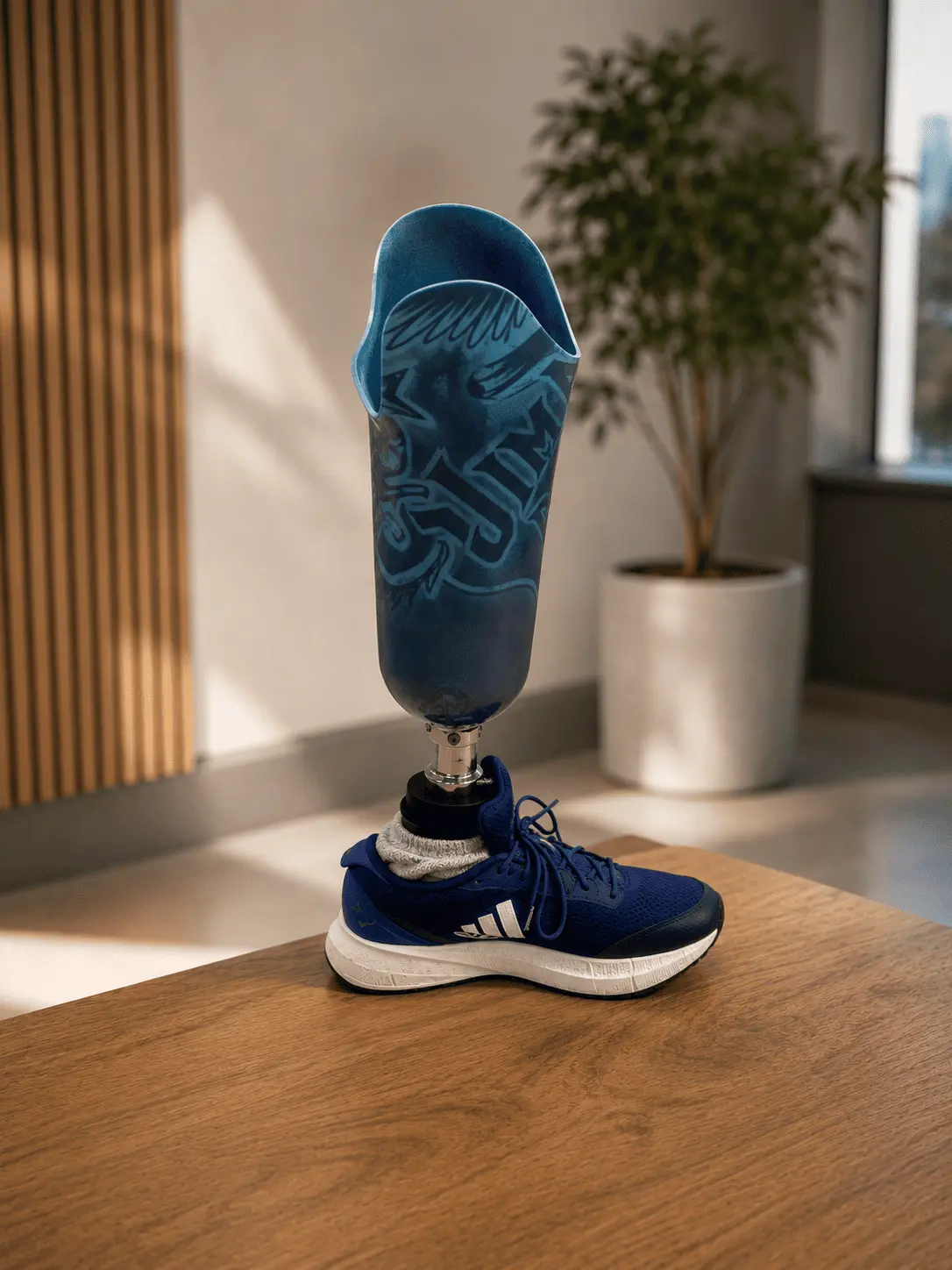
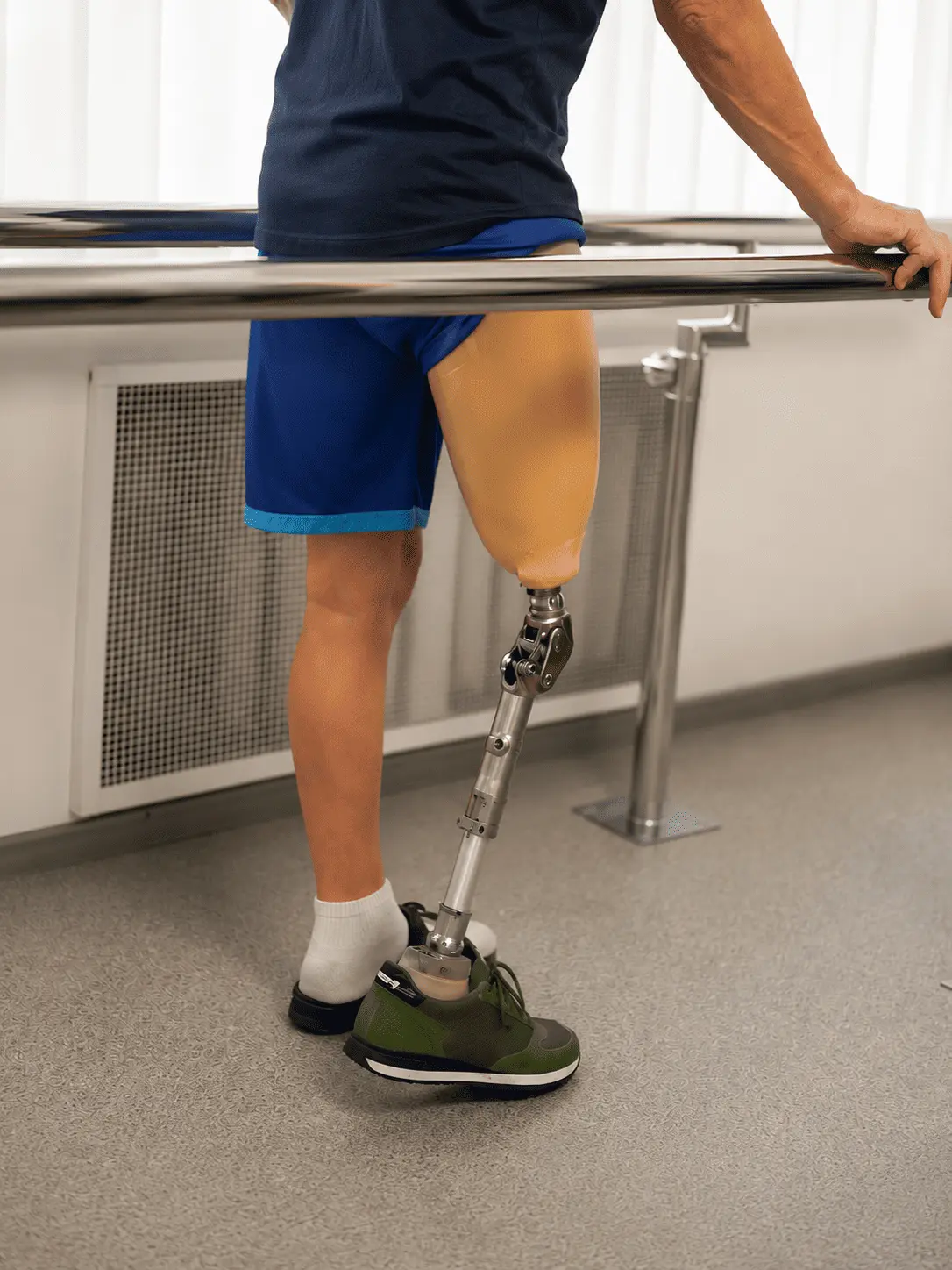
The All-Ukrainian Center for Rehabilitation and Prosthetics “Zdorovia” manufactures individual prostheses after a Chopart amputation that make it possible to compensate for the lost functions of the foot as fully as possible.
When designing the structure, specialists take into account:
the length of the stump;
the condition of the soft tissues;
the condition of the postoperative scar;
the range of motion of the ankle joint;
load distribution;
the patient’s level of physical activity.
A properly made prosthesis after a Chopart amputation helps to:
✓
restore stability while walking;
✓
bring back the natural roll-over of the foot;
✓
reduce the load on the joints of the lower limb;
✓
reduce the risk of contractures;
✓
increase safety and comfort during movement;
✓
return to everyday activity.
Every prosthesis goes through several stages of fitting and individual adjustment, which makes it possible to achieve maximum comfort in use.
Prosthetics after a Lisfranc amputation
A Lisfranc amputation involves the loss of the forefoot while most of the supporting surface is preserved. Despite the relatively small extent of the amputation, the person loses the ability to perform a full roll-over of the foot while walking, which significantly affects stability and load distribution.
The All-Ukrainian Center for Rehabilitation and Prosthetics “Zdorovia” manufactures modern prostheses after a Lisfranc amputation that make it possible to restore foot function as fully as possible and improve the patient’s quality of life.
The main objectives of such prosthetics are:
restoring the correct roll-over of the foot;
compensating for the lost forefoot;
improving stability;
reducing the load on the ankle and knee joints;
preventing overload of the healthy leg;
returning to the usual physical activity.
The design of the prosthesis is selected individually, taking into account the characteristics of the stump, the patient’s activity level and everyday needs.
Prosthetics after a Pirogov amputation
A Pirogov amputation belongs to osteoplastic operations in which the weight-bearing capacity of the stump is preserved through the use of the calcaneus. Despite the preserved ability to bear partial weight, most patients need a properly selected prosthesis to restore full walking biomechanics.
At the All-Ukrainian Center for Rehabilitation and Prosthetics “Zdorovia”, specialists have experience in fitting patients after a Pirogov amputation and select the design with the specifics of this operation in mind.
A properly made prosthesis makes it possible to:
✓
reduce the load on the healthy limb;
✓
improve load distribution while walking;
✓
increase comfort during long walks;
✓
return to everyday life and work.
Every prosthesis after a Pirogov amputation is made individually following a comprehensive examination of the patient and several stages of fitting.