Lumbar Spine Orthosis in Ukraine
Support, Stabilisation and Decompression of the Lower Back
Support, Stabilisation and Decompression of the Lower Back
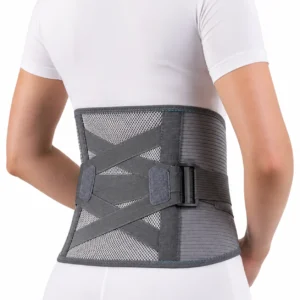
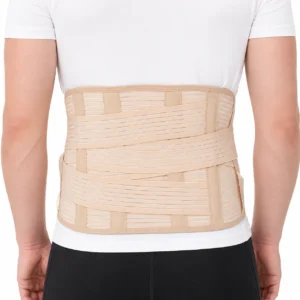
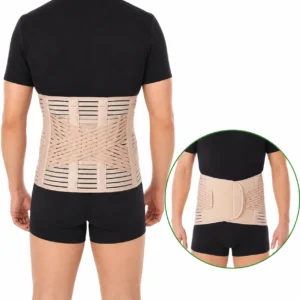
A lumbar spine orthosis is a medical orthopaedic device used to support the lower back, reduce the load on the spine and relieve pain during movement, sitting or physical activity.
A lumbar orthosis helps stabilise the spine, restrict unwanted movements and create more comfortable conditions for recovery after injuries, surgery and spinal conditions.
A lumbar orthosis is an orthopaedic device designed to immobilise and support the lumbar spine.
Depending on its design, an orthosis helps:
A lumbar orthosis immobilises the lower spine and helps maintain the back in a more correct position.
It helps:
A lumbar spine orthosis may be prescribed for:
An orthosis helps reduce the load on the spine and back muscles, relieve pain and improve movement safety.
Main types
Selection of an orthosis depends on a number of individual factors assessed by the specialist during examination.
Selection depends on:
An incorrectly selected orthosis may:
Custom fabrication tailored to each patient’s individual needs
Our centre fabricates:
These devices help:
At our centre you can receive a free orthopaedic consultation.
During the consultation, the specialist will:
In cases of spinal conditions and lumbar overload, additional support is often required. Timely use of an orthosis helps prevent deterioration and improve movement comfort.
An orthosis helps:
The cost of an orthosis depends on: the type of design, degree of fixation, materials used, fabrication complexity and the patient’s individual characteristics.
Approximate pricing for lumbar orthoses
from 2,500 UAH
Soft fixation, prevention
from 5,000 UAH
Medium fixation, rehabilitation
from 6,000 UAH
Rigid fixation, post-operative
Our centre offers free provision of lumbar spine orthoses under the government rehabilitation aid programme.
“All-Ukrainian Center for Rehabilitation and Prosthetics “ZDOROVIA” LLC provides free individual services to people with disabilities, supplying them with prosthetic and orthopaedic devices.
Our work is built on the extensive experience of our European partners, enabling us to produce comfortable and personalised orthopaedic devices adapted to the needs of our patients.
Answers to common questions
In some cases — yes. With moderate instability, muscle overload and early-stage degenerative changes, an orthosis helps reduce spinal load and relieve pain. However, the decision on whether surgery is necessary is made by the doctor following diagnosis.
The orthosis partially unloads the lumbar muscles and ligaments, restricts painful movements and helps stabilise the spine. This reduces muscle tension and decreases the load on the affected area.
Yes. Lumbar orthoses are frequently used for herniated discs to reduce the load on the spine and restrict movements that intensify pain. This is particularly relevant during flare-ups and throughout the recovery period.
A too-soft orthosis may not provide adequate support, while an excessively rigid one may cause discomfort and restrict movement more than necessary. The effectiveness of an orthosis depends directly on correct selection of design and fixation level.
Yes. Prolonged sitting significantly increases the load on the lumbar region. An orthosis helps support the lower back, reduce muscle tension and ease discomfort when working at a computer or driving.
Not always. In some cases the orthosis is recommended only during activity, prolonged sitting, walking or physical exertion. The wearing schedule depends on the diagnosis and is determined individually by the specialist.
Yes. The wrong size, an unsuitable level of fixation or prolonged use without a specialist’s guidance can reduce the effectiveness of support and cause additional discomfort.
Yes. An orthosis helps stabilise the lumbar region and reduce spinal overload during physical activity, warehouse work, construction, training and heavy lifting.
Yes. Post-operative orthoses are frequently prescribed to restrict movement, reduce the load on the spine and allow safer tissue recovery following surgical intervention.
In many cases — yes. With chronic degenerative spinal changes, an orthosis helps reduce overloading of the back muscles and joints, improve movement comfort and ease everyday activities.
A correctly fitted orthosis:
Most modern lumbar orthoses have an anatomical profile and are suitable for daily use under everyday clothing, including at work or during commuting.
When the lumbar region is constantly overloaded, the muscles and ligaments remain under tension, which can intensify pain and slow recovery. Timely support helps reduce the load on the spine and lower the risk of deterioration.
If you need a lumbar spine orthosis — contact our centre.
👉 Book a free orthopaedic consultation and get assistance with selecting, fabricating and obtaining an orthosis under the government programme.