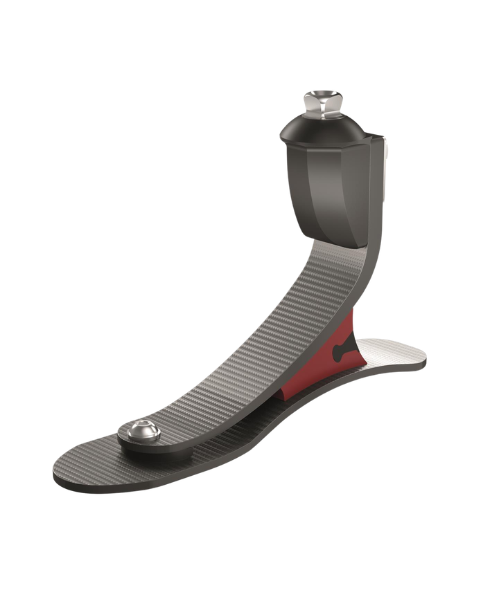
Modern leg prostheses for children and adults
Losing a lower limb is a serious challenge that changes a person’s usual way of life. However, modern lower limb prosthetics makes it possible to restore mobility and independence, and to get back to favorite activities, work, travel, driving, and an active life.
At the All-Ukrainian Center for Rehabilitation and Prosthetics “Zdorovya”, free lower limb prosthetics is provided under Ukraine’s state program. We support patients at every stage of recovery — from the first consultation and help with paperwork to manufacturing an individual prosthesis, training in its use, and comprehensive rehabilitation.
Our center specializes in prosthetics after leg amputation of any complexity. We perform primary and repeat prosthetics, manufacture foot, below-knee and above-knee prostheses, and successfully work with complex clinical cases, including high-level amputations and bilateral prosthetics.
Every prosthesis is made individually, taking into account the level of amputation, the condition of the residual limb, the patient’s age, physical activity level, occupation and lifestyle. This approach makes it possible to achieve the most comfortable prosthesis fit, a natural gait and safe movement.
Free of charge
At the All-Ukrainian Center for Rehabilitation and Prosthetics “Zdorovya”, most patients receive lower limb prostheses free of charge thanks to the state program for providing technical rehabilitation aids.
Our specialists support the patient through every stage of applying for and receiving a prosthesis:
free consultation with an orthopedic doctor and prosthetist;
help preparing the necessary documents;
selecting the optimal prosthesis design;
individual manufacturing of the device;
fitting and precise adjustment;
training in prosthesis use;
comprehensive rehabilitation;
warranty and service support.
🏠 For patients coming from other regions of Ukraine, our centers provide free accommodation and meals for the entire period of prosthetics and rehabilitation.
We understand that after an amputation a person needs not only modern technical help but also professional support. That’s why we stay with every patient until they are fully adapted to their new prosthesis.
Our experience
Over the years, the All-Ukrainian Center for Rehabilitation and Prosthetics “Zdorovya” has helped more than 15,000 patients from all over Ukraine regain freedom of movement and improve their quality of life.
Patients choose our center for:
We work with civilian patients as well as with servicemembers, veterans, children and adults, helping restore independence even after the most complex levels of amputation.
Servicemembers and veterans
Since the start of the full-scale war, one of the most important areas of work for the All-Ukrainian Center for Rehabilitation and Prosthetics “Zdorovya” has been prosthetics for servicemembers and veterans who suffered amputations from combat injuries.
Blast injuries are often accompanied by complex damage to soft tissue, joints and bones, so these cases require an individual approach, extensive specialist experience and modern prosthetic technologies.
Our team supports servicemembers at every stage of recovery — from the first consultation and preparation for prosthetics to manufacturing an individual prosthesis, rehabilitation and a full return to active life.
For each patient we develop an individual solution, taking into account:
level of amputation;
condition of the residual limb;
physical fitness;
lifestyle;
occupation;
rehabilitation goals;
expected level of future physical activity.
We understand how important it is for servicemembers to regain their independence, so we pay special attention to the functionality, reliability and comfort of every prosthesis we make.
Specialization
One of the main strengths of the All-Ukrainian Center for Rehabilitation and Prosthetics “Zdorovya” is its successful work with complex amputation levels that require highly qualified specialists and extensive practical experience. Our center is one of the few in Ukraine that provides prosthetics for patients after:
1
high above-knee amputation
2
hip disarticulation
3
bilateral high lower limb amputation
4
paired lower limb amputation
5
severe blast injuries
6
complex combined amputations
Cases like these require not just manufacturing a prosthesis but also designing an individual construction, precisely adjusting every element, and providing lengthy comprehensive rehabilitation.
Our specialists have experience fitting patients who were previously turned away by other providers due to the complexity of their case. Thanks to modern technology and an individual approach, even patients with the highest levels of amputation get the chance to move independently again and gradually return to an active life.
Range
At the All-Ukrainian Center for Rehabilitation and Prosthetics “Zdorovya” we manufacture modern individual lower limb prostheses for virtually any level of amputation.
Every prosthesis goes through several fitting and precise-adjustment stages. This makes it possible to achieve optimal load distribution, a comfortable socket fit, and the most natural gait possible.
Technology
A prosthesis’s quality and functionality largely depend on the technologies, materials and components used. That’s why the All-Ukrainian Center for Rehabilitation and Prosthetics “Zdorovya” uses modern prosthetic systems from leading global manufacturers.
When manufacturing lower limb prostheses we use components from:




This makes it possible to select the optimal setup for practically any level of physical activity — from everyday walking to sports and the use of high-function prostheses.
Every prosthesis is designed individually. Specialists take into account not only the level of amputation but a range of other factors:
patient age;
weight;
height;
length and condition of the residual limb;
physical activity level;
occupation;
lifestyle;
prosthetics goals.
It is this individual approach that achieves maximum comfort, a natural gait and a long service life for the device.
Components
The quality, comfort and functionality of a modern prosthesis depend not only on the skill of the prosthetist but also on correctly selected components. At the All-Ukrainian Center for Rehabilitation and Prosthetics “Zdorovya” we use modern components from leading global manufacturers Ottobock (Germany), Nabtesco (Japan), Streifeneder (Germany), Teufel (Germany) and Fillauer (USA).
All components are selected individually, depending on the level of amputation, age, body weight, physical activity, occupation, residual limb condition and rehabilitation goals. This approach makes it possible to produce a prosthesis that best matches the patient’s needs, providing a natural gait, a high level of safety, and comfort in daily use.
Catalog
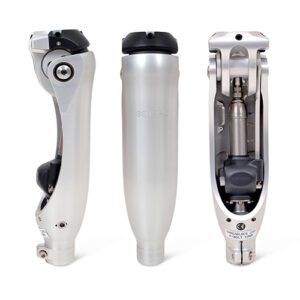
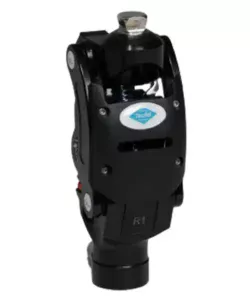
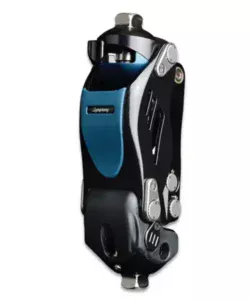
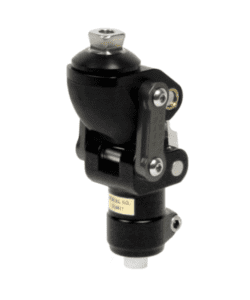
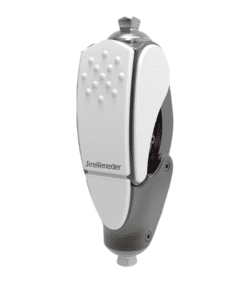
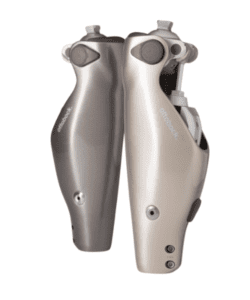
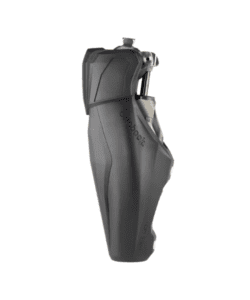
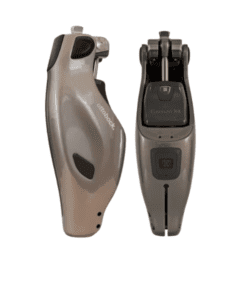
The knee unit is one of the most important elements of an above-knee prosthesis, as it is responsible for stability, smooth movement and safety while walking.
Catalog
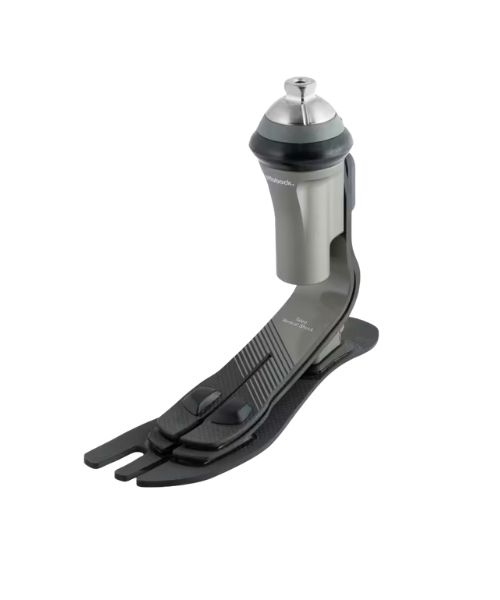
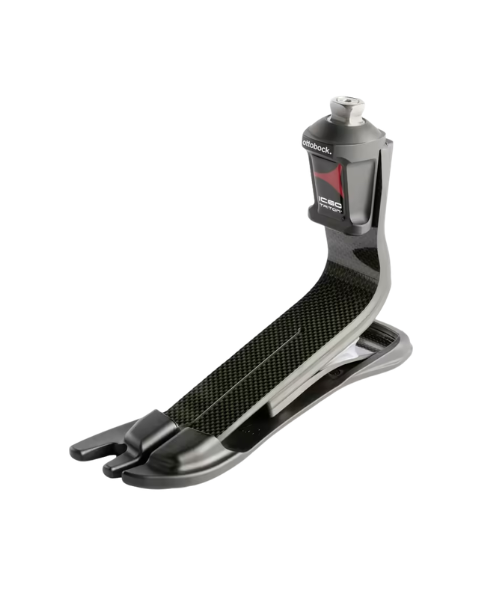
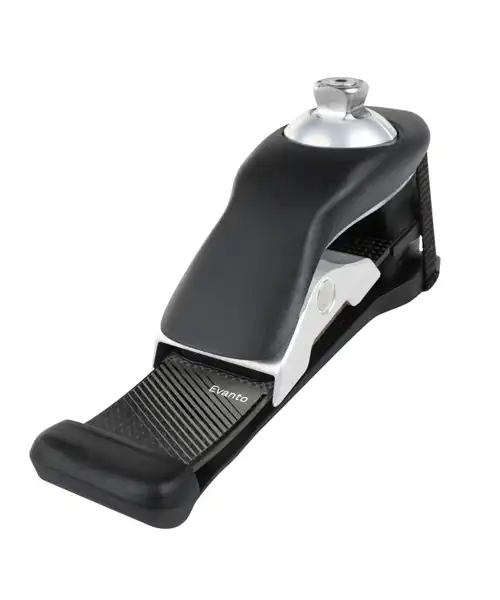
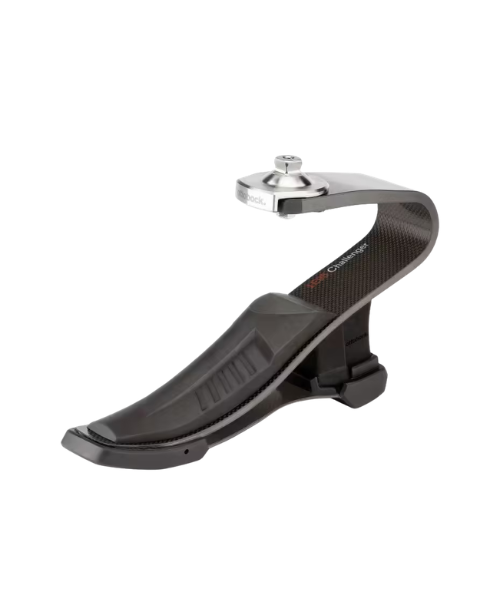
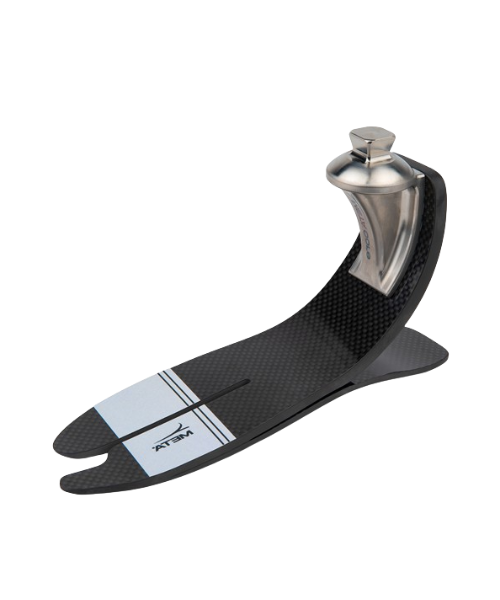
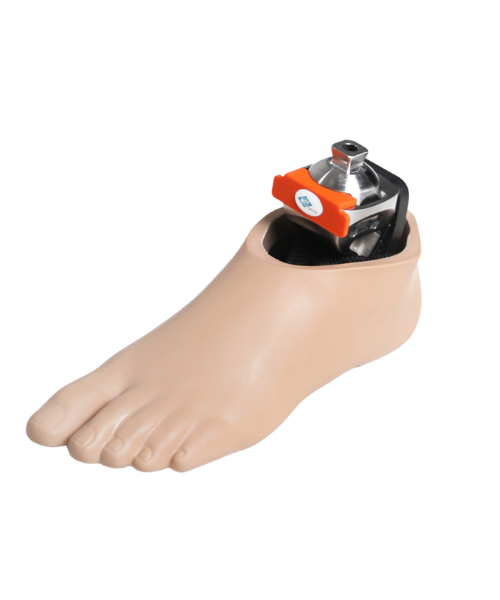
A prosthetic foot is responsible for stability, shock absorption, correct load distribution and a natural roll-over during walking.
Prosthesis component
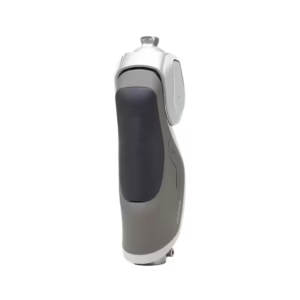
The socket is the core part of a prosthesis that comes into direct contact with the residual limb. It is what provides proper load transfer, stability and walking comfort.
At the All-Ukrainian Center for Rehabilitation and Prosthetics “Zdorovya”, every socket is made individually, taking into account the shape of the residual limb, the condition of the soft tissue, the level of amputation, and the patient’s anatomical features.
A properly made socket distributes the load evenly, reduces pressure on sensitive areas, prevents skin chafing and ensures a reliably secure fit for the prosthesis.
Prosthesis component
A liner is a special silicone or polyurethane sleeve worn over the residual limb before putting on the prosthesis.
It protects the skin from chafing, reduces pressure on soft tissue, improves the prosthesis’s fit and makes it significantly more comfortable to use. A well-matched liner helps reduce the risk of skin irritation and ensures a snugger socket fit.
Prosthesis component
Reliable prosthesis suspension is one of the main conditions for safe and comfortable walking.
Individual approach
There is no universal prosthesis that suits everyone equally. That’s why the specialists at VCRP “Zdorovya” individually select every element of the future prosthesis — the knee unit, the prosthetic foot, the socket, the liner and the suspension system.
This comprehensive approach makes it possible to create a prosthesis that best matches the patient’s anatomical features, activity level and lifestyle. As a result, patients gain comfort, safety, a natural gait, and high functionality in daily life.
Process
Prosthetics is a comprehensive process that includes not just manufacturing the prosthesis but also preparing the patient to use it.
Initial consultation
In the first stage, the patient has a consultation with an orthopedic doctor and a prosthetist. Specialists assess the condition of the residual limb, determine the level of physical activity, review the medical records, and help select the most appropriate design for the future prosthesis.
Manufacturing the individual prosthesis
After the necessary measurements are taken, work begins on manufacturing an individual socket and selecting the components. Every prosthesis is created taking into account the patient’s anatomical features and goes through several production stages.
Fitting and adjustment
During fittings, specialists check whether the socket fits correctly and adjust the height, the position of the joint modules, the angle at which the foot is mounted, and other construction parameters.
Further adjustments are made as needed to ensure maximum comfort and safety while walking.
Handing over the prosthesis to the patient
Once all adjustments are complete, the patient receives the fully finished individual prosthesis and moves on to the next important stage — learning how to use the new device.
After prosthetics
A modern prosthesis can significantly expand a person’s possibilities, but a successful outcome is impossible without proper rehabilitation.
At the All-Ukrainian Center for Rehabilitation and Prosthetics “Zdorovya” the patient goes through a comprehensive recovery program under the supervision of experienced specialists.
During rehabilitation, patients receive:
gait training;
balance development;
learning to go up and down stairs;
training turns and safe movement;
adapting to daily physical activity;
learning correct load distribution;
guidance on caring for the residual limb and the prosthesis.
Comprehensive rehabilitation significantly shortens the adaptation period and helps a person return to independent living more quickly.
Warranty
🤝
At the All-Ukrainian Center for Rehabilitation and Prosthetics “Zdorovya” we keep supporting the patient even after prosthetics is complete.
🛡️
All lower limb prostheses we manufacture come with a 1-year warranty. During the warranty period, the center’s specialists provide servicing, adjust the construction, and remedy any manufacturing defects in accordance with current Ukrainian law.
🔄
In addition to warranty service, patients are entitled to a free prosthesis replacement under the state program.
📅
For most lower limb prostheses, the standard service life is 3 years. After this period ends, a patient can receive a new prosthesis free of charge again, in accordance with the procedure established by law.
🧑⚕️
Our specialists will help guide you through the entire re-provisioning process: consultation, preparing the necessary documents, manufacturing a new individual prosthesis, adjusting it, and, if needed, running a repeat course of rehabilitation.
Our advantages
✓
More than 15,000 patients who have successfully completed prosthetics and rehabilitation.
✓
Free prosthetics under Ukraine’s state program.
✓
Centers in Kyiv, Odesa and Rivne.
✓
Free accommodation and meals for out-of-town patients.
✓
Individual manufacturing of every prosthesis.
✓
Modern technology and components from leading global manufacturers.
✓
Comprehensive rehabilitation after amputation.
✓
A 1-year warranty on all prostheses we manufacture.
✓
Free prosthesis replacement once the service life expires, under the state program.
✓
Prosthetics for adults, children, servicemembers and veterans.
✓
One of the few centers in Ukraine that provides prosthetics after hip disarticulation, as well as for bilateral high lower limb amputations.
FAQ
Answers to common questions about lower limb prosthetics
The sooner a patient starts preparing for prosthetics, the easier the recovery tends to be. However, a prosthesis can only be made once the surgical wound has fully healed and the residual limb has taken shape. The right timing is determined individually by the doctor.
Before prosthetics can begin, it’s important to prepare the residual limb properly. Our center’s specialists provide guidance on care, compression therapy, exercises and tissue preparation for the future prosthesis. This helps avoid complications and makes adaptation easier.
Yes. Under the state program, patients can receive not just basic models but modern, fully functional prostheses, if warranted by medical indications and level of physical activity. Our specialists will help select the optimal configuration and prepare the necessary documents.
Many patients take their first confident steps during rehabilitation itself. Full adaptation can take anywhere from a few weeks to several months, depending on the level of amputation, physical fitness, age and how regularly the person trains.
In many cases — yes. With a properly fitted prosthesis and after completing a rehabilitation course, most patients move on to walking independently without extra support. The speed of recovery depends on individual factors and the level of amputation.
In many cases, yes. After adapting to the prosthesis and with no medical contraindications, many patients return to driving. The decision is made individually, taking into account the level of amputation and specialists’ recommendations.
Yes. Modern prostheses allow for swimming, cycling, fitness, running and other kinds of physical activity. The type of load depends on the prosthesis design and the recommendations of the rehabilitation team.
If you notice pain, chafing, a feeling of instability, a change in your gait, or discomfort while walking, you should contact your prosthetist. Don’t try to adjust the prosthesis’s construction yourself.
Yes. Over time, the volume of the residual limb, body weight, physical activity level, or the condition of the components may change. In some cases an adjustment is enough, while in others a new prosthesis needs to be made.
Yes, if the construction no longer matches your medical indications, the shape of your residual limb has changed, or the prosthesis has worn out. The center’s specialists will help assess the situation and explain your options for replacement under the state program.
Even the most advanced prosthesis won’t deliver its full potential without proper rehabilitation. Gait training, balance exercises, muscle strengthening and working with a rehabilitation therapist are what help patients adapt faster and safely return to an active life.
Yes. We work not only with patients following a recent amputation but also with people who have been using prostheses for many years already. If needed, our specialists will help select a new construction, replace an old prosthesis, or go through a repeat rehabilitation course.