Modern Shoulder Prostheses

Types and Functionality

Shoulder Prosthesis (Above the Elbow) in Ukraine

Modern Bionic and Mechanical Shoulder Prostheses — Selection, Manufacturing, Adaptation

Upper limb prosthetics, including shoulder prostheses (above the elbow), are aimed at restoring lost arm functions and returning the patient to daily activities.

In Ukraine, modern solutions are used — from mechanical to bionic prostheses controlled through muscle signals.

We support the patient at every stage — from consultation and selection to training on prosthesis use and ongoing maintenance.

Our centers are located in Kyiv, Odesa, and Rivne. We accept patients from all over Ukraine and ensure full comfort throughout the prosthetics process.


In What Cases Is Shoulder Prosthetics Performed

Prosthetics is recommended for patients with:

  • Arm amputation above the elbow due to injuries (road accidents, workplace injuries)
  • Consequences of combat operations and mine-blast wounds
  • Congenital absence of a limb
  • Serious illnesses (oncology, vascular pathologies)
  • Inability to restore arm function through surgical or other methods


Amputation Levels in Shoulder Prosthetics

The type of prosthesis directly depends on the level of amputation:

  • Above-elbow amputation (transhumeral)
  • Amputation at the shoulder joint level
  • High shoulder amputation

The higher the amputation level, the more complex the prosthesis design and the adaptation process.


Features of Shoulder Prosthetics

A shoulder prosthesis is considered one of the most complex types of upper limb prosthetics.

Key features:

  • Several functions need to be restored simultaneously — the elbow and the hand
  • Controlling the prosthesis is more complex than with a below-elbow amputation
  • Precise calibration of the control system is required
  • Stable fixation of the prosthesis on the stump is essential
  • A longer rehabilitation and training period is required

How a Shoulder Prosthesis Works

Depending on the type of prosthesis, different control principles are used:

Mechanical prostheses

  • operate through shoulder and body movements
  • allow basic actions to be performed
  • reliable and easy to use

Bionic prostheses (myoelectric)

  • read muscle signals (EMG)
  • allow control of the elbow and hand
  • provide more precise and natural movements

Types of Shoulder Prostheses

The type of prosthesis is selected individually.

Cosmetic (passive)

  • imitate the appearance of an arm
  • do not perform active functions
  • used for psychological comfort

Mechanical (body-powered) shoulder prostheses

  • controlled through shoulder and body movements
  • allow basic actions to be performed
  • reliable and easy to use
  • require no electronics

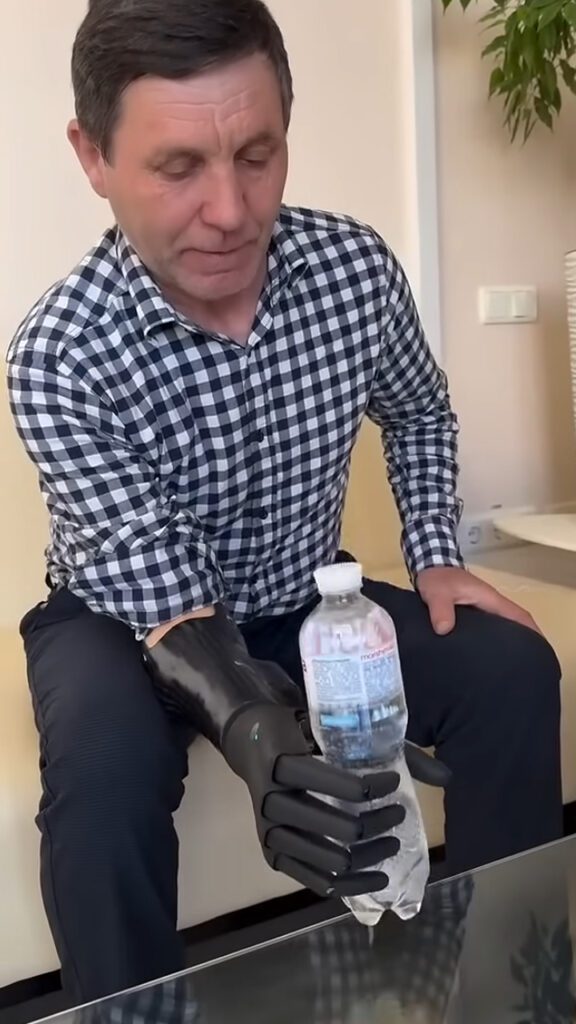
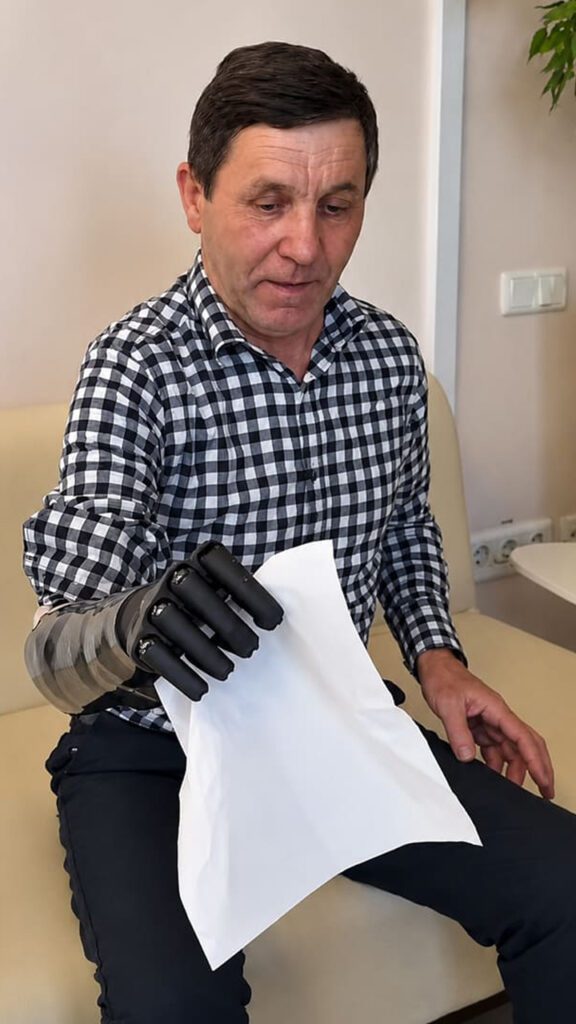
Bionic (myoelectric) arm prostheses

  • controlled by muscle signals (EMG)
  • provide precise movements of the hand and fingers
  • allow everyday tasks to be performed:
    •           gripping objects
    •           using a phone
    •           work and self-care

Adaptation to a Shoulder Prosthesis

The adaptation process takes place in stages:

  • first skills — 1–2 weeks
  • basic adaptation — 1–2 months
  • confident use — up to 3–6 months

The timeframe depends on the amputation level, the type of prosthesis, and the regularity of training.


What Can Be Done with a Shoulder Prosthesis

After adaptation, the patient can:

  • perform household tasks
  • use a phone
  • dress independently
  • cook
  • work

Functionality depends on the type of prosthesis and the amputation level.


What Is Important to Consider

Shoulder prosthetics has its limitations:

  • training and regular practice are required
  • not all movements can be fully restored
  • periodic adjustment is necessary
  • bionic prostheses require charging and maintenance

Possible Difficulties and Their Solutions

During the adaptation process, the following may occur:

  • discomfort or chafing from the socket
  • difficulties with control
  • muscle fatigue
  • phantom pain

These issues are resolved through prosthesis adjustment and work with a rehabilitation specialist.


The Impact of Stump Condition

The condition of the stump directly affects:

  • wearing comfort
  • prosthesis control
  • the adaptation period

That is why a detailed assessment is carried out before prosthetics fitting.


Next-Generation Bionic Shoulder Prostheses

One of the most advanced solutions is the developments by Esper Bionics.

Esper Hand

A modern bionic arm prosthesis with artificial intelligence elements.

Key capabilities:

  • reading muscle impulses
  • adaptation to the user
  • learning movements over time
  • natural hand control
  • multiple grip types

Advantages:

  • high precision
  • fast adaptation
  • personalization to lifestyle

Cost of a Shoulder Prosthesis (Above the Elbow) in Ukraine

The cost of a shoulder prosthesis depends on the amputation level, the type of prosthesis, and its functionality. Such prostheses are more complex than standard ones, as they include an elbow module and a hand control system.

Mechanical prostheses are more affordable and suitable for basic tasks — approximately from 80,000 to 250,000 UAH. Bionic prostheses provide a wider range of functionality and require more complex calibration — approximately from 500,000 to 2,500,000 UAH and above.

The price includes not only the prosthesis itself, but also selection, manufacturing, calibration, training, and rehabilitation.

In Ukraine, a shoulder prosthesis can be provided free of charge under a government program if there are medical indications and an IPR (Individual Rehabilitation Program).


Free Prosthetics

Shoulder prosthetics and above-elbow arm prosthetics in Ukraine can be provided free of charge under the government program for the provision of technical rehabilitation aids.

The program is implemented in accordance with Cabinet of Ministers of Ukraine Resolution No. 321 of 2012 and guarantees the right to free prosthetics when medical indications are present.

The All-Ukrainian Rehabilitation and Prosthetics Center “ZDOROVYE” participates in this program and provides a full prosthetics cycle — from document processing to complete patient adaptation.


What Is Included in Free Shoulder Prosthetics

At our center, not only the shoulder prosthesis itself is provided free of charge, but also a full range of services:

  • manufacturing of mechanical and bionic shoulder prostheses (above-elbow arm prostheses)
  • individual fitting and calibration of the prosthesis
  • full rehabilitation and training on prosthesis use
  • specialist support at every stage


Additionally for patients:

  • free specialist home visit
  • or free transportation to the center
  • free accommodation and meals during the prosthetics period
  • assistance with processing all documents

Manufacturing timeframes for a shoulder prosthesis:

  • mechanical shoulder prostheses — up to 20 working days
  • complex bionic above-elbow arm prostheses — up to 30 working days

Each stage includes fittings and adjustments for a precise fit and comfortable use.

Important When Applying

When receiving a referral from social protection authorities, it is necessary to specify our center — LLC “All-Ukrainian Rehabilitation and Prosthetics Center ‘ZDOROVYE'” — as the facility where the prosthetics fitting will be carried out.

This is recorded in the documents and affects the ability to undergo prosthetics fitting at the chosen center specifically.

When Can a Shoulder Prosthesis Be Obtained Free of Charge in Ukraine

A patient has the right to free shoulder prosthetics (above-elbow arm) under the government program for the provision of rehabilitation aids.

Grounds:

  • presence of a disability or medical indications
  • conclusion of a medical commission (VKK / MSEK)
  • an issued Individual Rehabilitation Program (IPR)


Что важно:

  • пациент самостоятельно выбирает предприятие для протезирования
  • выбранный центр указывается в направлении
  • государство компенсирует стоимость протеза в рамках установленного бюджета

Who Is Entitled to Free Prosthetics

  • citizens with disabilities
  • military personnel and veterans
  • those injured as a result of combat operations
  • patients after above-elbow arm amputation and other medical indications

Important: rehabilitation for military personnel and veterans is carried out at the Rivne Regional War Veterans Hospital.


How Shoulder Prosthetics Is Carried Out

1. Consultation

  • assessment of the stump condition
  • determination of the amputation level

2. Prosthesis Selection

  • choice of type (mechanical or bionic)
  • consideration of the patient’s needs

3. Manufacturing

  • creation of an individual socket
  • calibration of the control system

4. Rehabilitation and Training

  • training on prosthesis control
  • development of everyday skills

5. Service

  • maintenance
  • repair
  • replacement if necessary

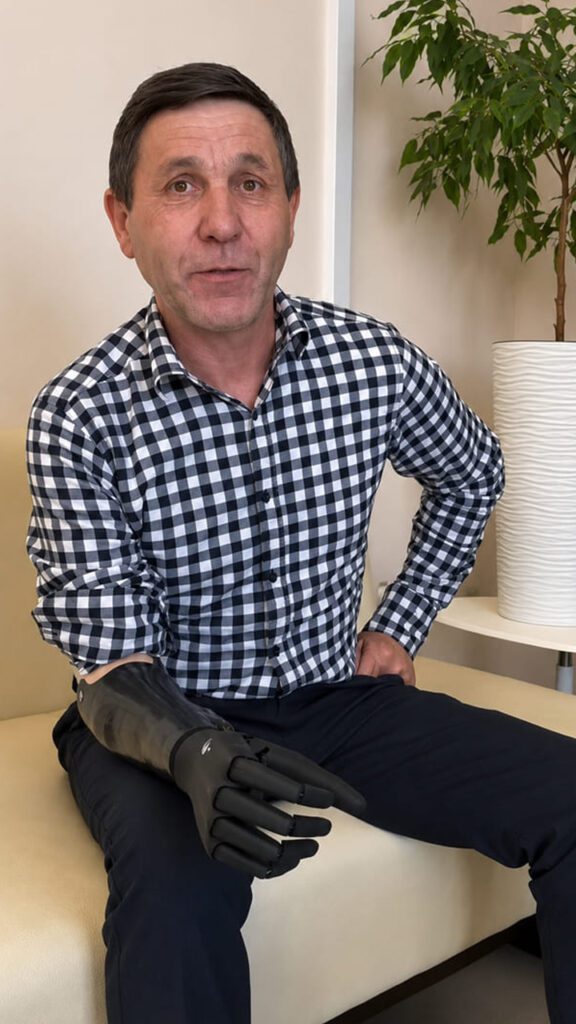
Andriy — a military serviceman who was fitted with a bionic arm prosthesis

Андрій — військовий, який отримав біонічний протез руки

FAQ

When can shoulder prosthetics begin after amputation?
After complete healing of the stump and the doctor’s approval. On average — after 4–8 weeks, but the timeframe depends on the condition of the tissues.


How does a shoulder prosthesis differ from a forearm prosthesis?
A shoulder prosthesis is more complex: it must compensate for two functions at once — the elbow joint and the hand — and therefore requires more complex calibration and training.


How does a shoulder prosthesis work?
Depending on the type:

  • mechanical — through shoulder and body movements
  • bionic — through muscle signals (EMG) that control the elbow and hand

Can arm movements be fully restored?
Not fully — but modern bionic prostheses allow most everyday and work tasks to be performed.


Is it difficult to control a shoulder prosthesis?
Yes, it is one of the most complex types of prosthetics. But with training and regular practice, control becomes natural.


How long does adaptation to a shoulder prosthesis take?

  • first skills — 1–2 weeks
  • basic adaptation — 1–2 months
  • confident use — up to 3–6 months

Which shoulder prostheses are better — mechanical or bionic?

  • mechanical — reliable and simple
  • bionic — more functional and convenient in everyday life

The choice depends on the patient’s needs.


Can a shoulder prosthesis be obtained free of charge in Ukraine?
Yes. Prosthetics are provided free of charge under the government program if there are medical indications and an issued IPR.


What is included in free shoulder prosthetics?

  • prosthesis manufacturing
  • individual calibration
  • control training
  • rehabilitation
  • specialist support

Can I work with a shoulder prosthesis?
Yes. Many patients return to work after adaptation.


Can I drive a car with a shoulder prosthesis?
Yes, after completing adaptation and with a sufficient level of prosthesis control.


Can I use a phone and small objects?
Yes, especially with bionic prostheses, which provide precise gripping.


What should I do if the prosthesis is uncomfortable or causes chafing? Contact the center — socket adjustment is carried out. This is a normal stage of adaptation.


How long does a shoulder prosthesis last?
The service life depends on the load and type of prosthesis, but requires regular maintenance and periodic replacement of components.


Is it necessary to come to the center?
Yes, for fittings, calibration, and training. A specialist home visit or transportation is also available.


Is accommodation available during the prosthetics period?
Yes, accommodation and meals are provided free of charge.


Is there rehabilitation after shoulder prosthetics?
Yes. This is a mandatory part of the process — training on prosthesis control and restoration of skills.
Get a Consultation

If you or your loved ones need upper limb prosthetics — it’s important to start with a professional assessment.

👉 Leave a request and get a specialist consultation