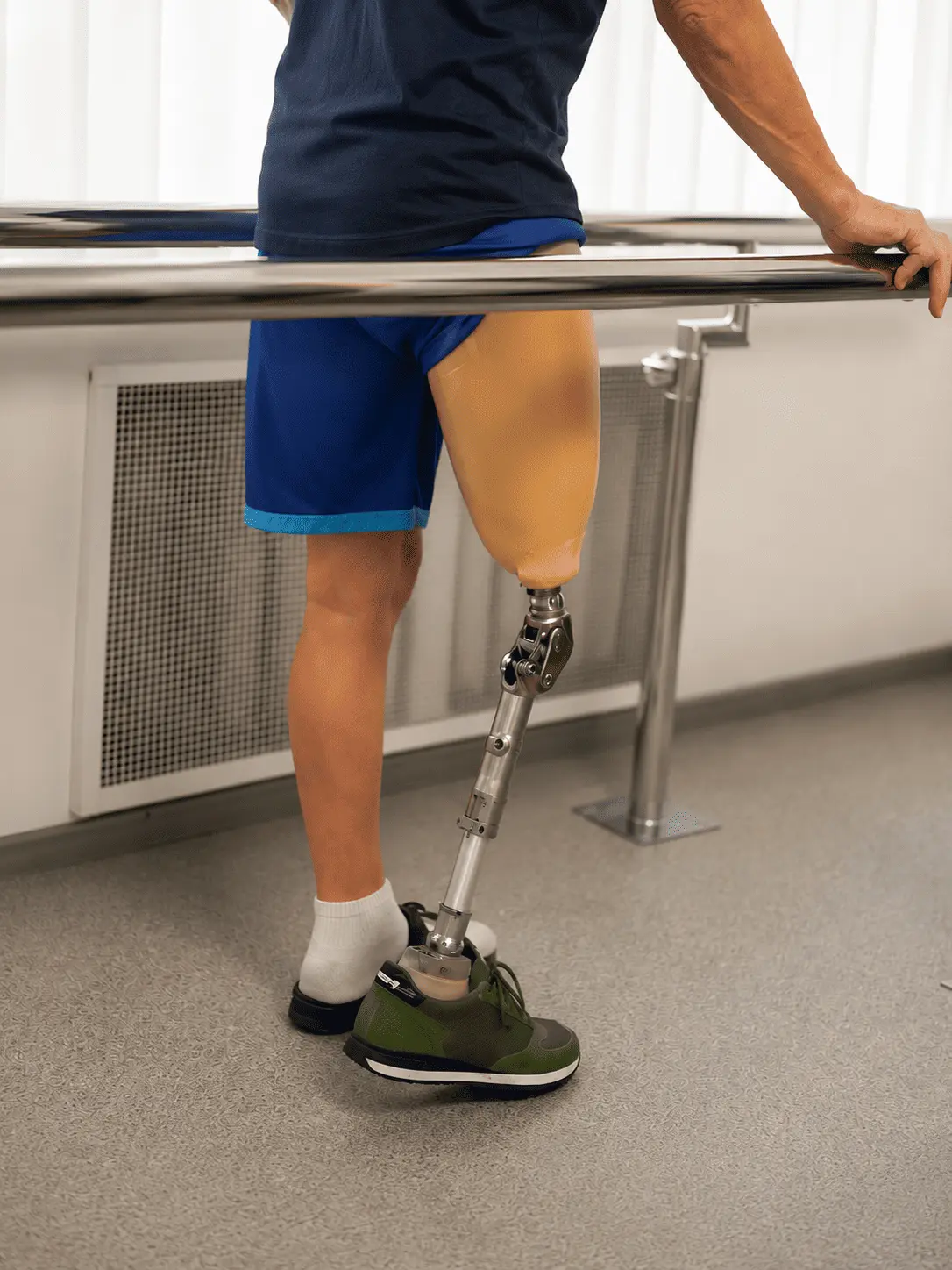
Prosthesis for disarticulation

Reliable assistive devices with German components
All-Ukrainian Center for Rehabilitation and Prosthetics «Zdorovya»

Hip Disarticulation Prosthesis FREE OF CHARGE in Ukraine

Prosthetics after disarticulation at the hip joint

15,000
patients who have successfully completed prosthetics and rehabilitation
1 year
Warranty on the manufactured prosthesis
3 years
Free replacement after the end of the standard service life
3
Branches in Kyiv, Odesa and Rivne

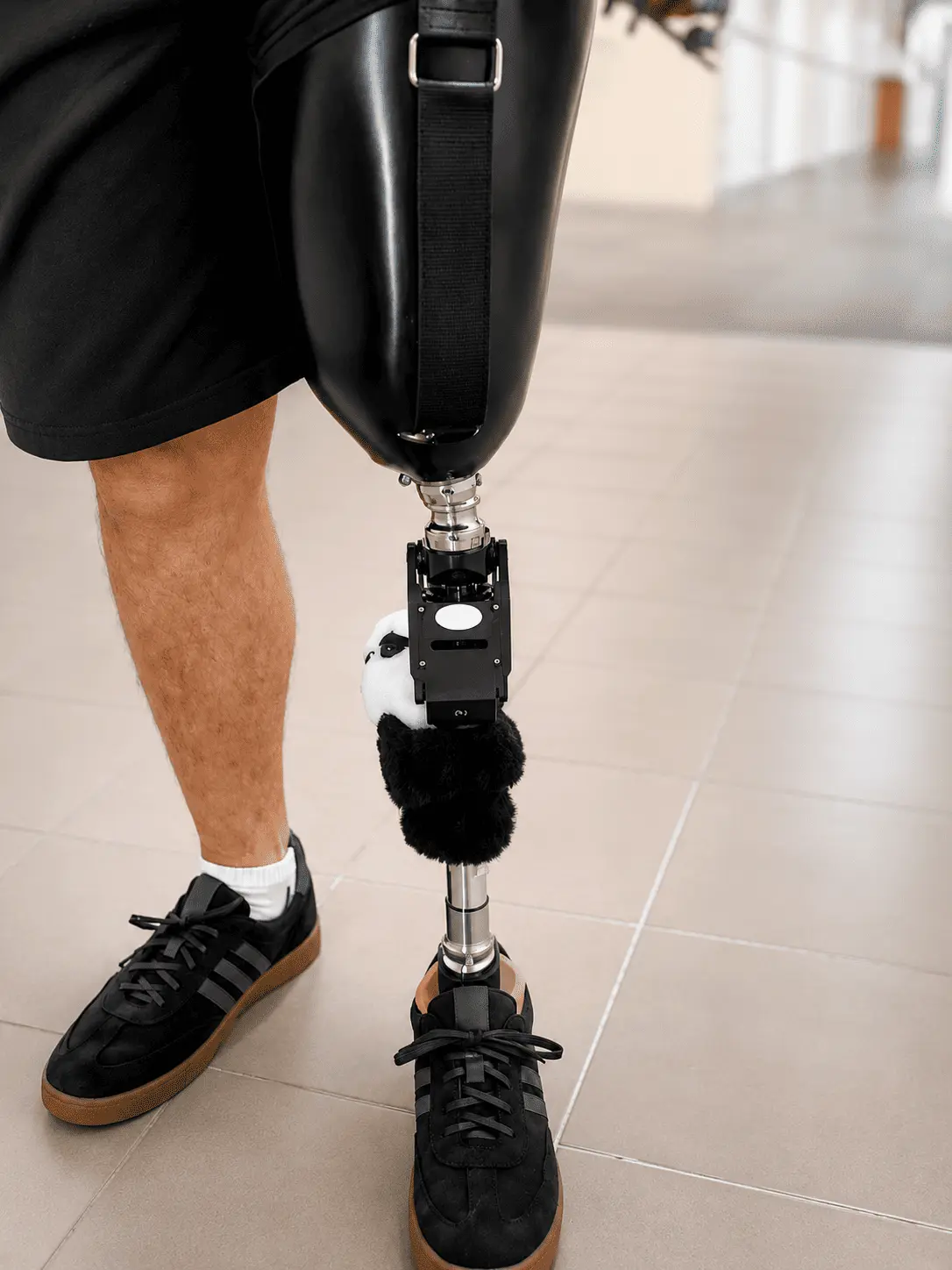
A hip disarticulation prosthesis is one of the most complex types of lower limb prosthetics. It is used after disarticulation at the hip joint, when the lower limb is completely absent and only the pelvic area remains.

This level of amputation requires highly qualified specialists, individual design of the structure and precise adjustment of every component of the prosthesis. At the All-Ukrainian Center for Rehabilitation and Prosthetics «Zdorovya», modern prostheses after hip disarticulation are manufactured using components from leading global manufacturers, with the design selected individually for each patient.

Our center is one of the few in Ukraine with practical experience in manufacturing hip disarticulation prostheses, and we help patients even in the most complex clinical cases.

Free prosthetics after hip disarticulation

At the All-Ukrainian Center for Rehabilitation and Prosthetics «Zdorovya», patients can receive a prosthesis after disarticulation free of charge under the state program for the provision of technical rehabilitation aids.

We support the patient at every stage:

1
free consultation with an orthopedic doctor;
2
consultation with a prosthetic technician;
3
assistance with paperwork;
4
individual design of the structure;
5
manufacturing of the prosthesis;
6
fittings and adjustment;
7
training in use;
8
comprehensive rehabilitation;
9
warranty support.
🏠
Patients from other regions of Ukraine are provided with free accommodation and meals for the entire period of prosthesis manufacturing and rehabilitation.

Why prosthetics after hip disarticulation is considered one of the most complex

In hip disarticulation, the femur is absent, so it is impossible to use the traditional prosthesis fixation methods applied after transfemoral amputation.

The design of such a prosthesis must simultaneously:

provide reliable fixation;
compensate for the absence of the hip joint;
restore stability;
ensure natural biomechanics of movement;
withstand high loads while walking;
remain comfortable during prolonged use.

That is why manufacturing a hip disarticulation prosthesis requires extensive specialist experience, precise calculations and the use of modern components.

Why patients choose ACRP «Zdorovya»

The All-Ukrainian Center for Rehabilitation and Prosthetics «Zdorovya» has extensive experience working with complex cases of lower limb amputation.

We provide prosthetics for patients:

1
after disarticulation at the hip joint;
2
after high transfemoral amputation;
3
after bilateral high amputations;
4
after severe blast injuries;
5
after oncological diseases;
6
after complex repeat surgeries.

Thanks to our own production facilities, modern technologies and highly qualified specialists, we are able to manufacture structures that help patients restore mobility even after the most complex levels of amputation.

Which hip disarticulation prostheses we manufacture

At the All-Ukrainian Center for Rehabilitation and Prosthetics «Zdorovya», modern prostheses after hip disarticulation are manufactured for patients with different levels of physical activity and different clinical cases.

We provide prosthetics:

1
after disarticulation at the hip joint;
2
after hemipelvectomy (where medically indicated);
3
after oncological surgery;
4
after severe blast injuries;
5
after severe road traffic accidents;
6
after workplace injuries;
7
after complex repeat surgeries.

Every hip disarticulation prosthesis is designed individually. During manufacturing, our specialists take into account the anatomical features of the pelvis, the condition of soft tissues, body weight, age, level of motor activity, lifestyle and rehabilitation goals.

Which hip disarticulation prosthesis is right for you

There are no standard solutions for patients after disarticulation.

When selecting the design, specialists assess:

the level of amputation;
the features of the pelvis;
the condition of the skin and soft tissues;
the presence of postoperative scars;
body weight;
height;
the level of physical activity;
occupation;
everyday needs;
the wish to take up sports;
the need for long-distance walking.
🎯

Based on this data, an individual prosthesis design is selected that provides maximum stability, safety and comfort.

The main task of the specialists at ACRP «Zdorovya» is not simply to manufacture a prosthesis, but to give a person back the ability to move independently, take care of themselves and lead the most active life possible.

Modern components for hip disarticulation prostheses

Manufacturing a prosthesis after disarticulation requires the use of modern high-tech components. The All-Ukrainian Center for Rehabilitation and Prosthetics «Zdorovya» uses components from leading global manufacturers: Ottobock (Germany), Nabtesco (Japan), Streifeneder (Germany), Teufel (Germany) and Fillauer (USA).

Ottobock
Germany
Nabtesco
Japan
Streifeneder
Germany
Teufel
Germany
Fillauer
USA

All structural elements are selected individually depending on the patient’s weight, activity level, anatomical features and the tasks the future prosthesis will have to perform.

🦿

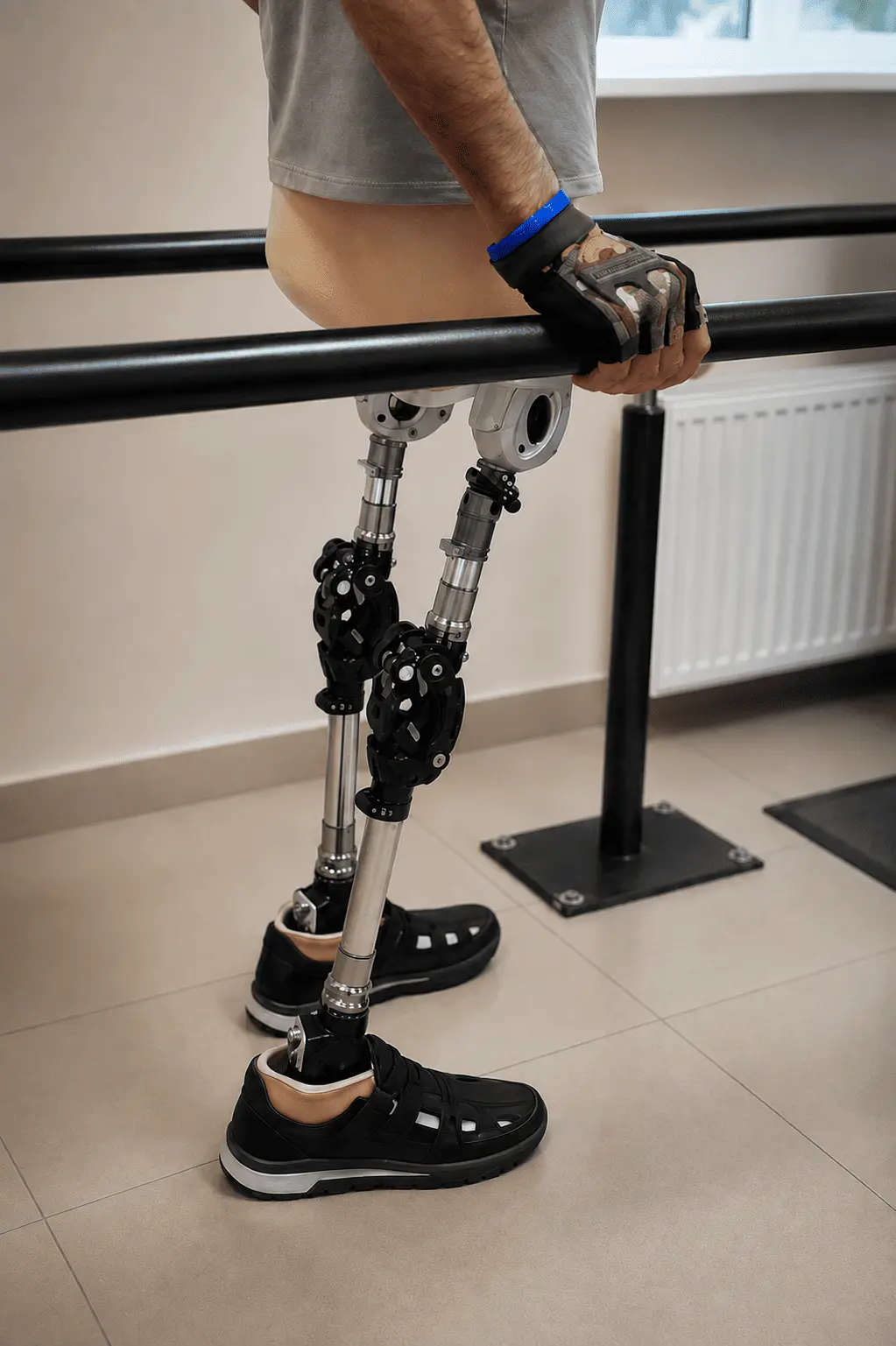
Hip joint modules

In disarticulation, the patient’s own hip joint is absent, so its function is performed by a special hip joint module.

It provides:

stability while walking;
smooth leg movement;
correct biomechanics;
a safe start to each step;
a more natural gait.

A properly selected hip joint module makes learning to walk significantly easier and reduces energy expenditure while moving.

⚙️

Knee modules

Most hip disarticulation prostheses are equipped with modern knee modules.

Depending on the patient’s activity level, the center’s specialists use:

mechanical knee modules;
hydraulic knee modules;
microprocessor knee modules.

We work with modern models including Ottobock C-Leg 4, Genium X3, Genium X4, Dynion 3R85, Nabtesco Symphony Knee, KnieAgil R1, Sensor Knee and other systems, which allows us to select the most effective solution.

🦶

Prosthetic feet

A properly selected prosthetic foot plays an important role in the patient’s stability and safety.

Depending on the level of physical activity, modern carbon feet are used, which provide:

a natural roll-over;
energy return;
stability;
shock absorption;
comfort during long walks.

The center’s specialists select the design individually, taking into account body weight, activity level and conditions of use.

📐

Custom pelvic socket

In disarticulation, the pelvic socket is one of the most complex elements of the entire structure.

It encloses the pelvic area and provides:

reliable fixation of the prosthesis;
proper load distribution;
stability;
comfort while sitting and walking.

Each pelvic socket is made individually and goes through several stages of fitting and precise adjustment.

🛡️

Liners and soft components

To improve comfort, we use modern soft materials and individually selected components that reduce pressure on sensitive areas and make wearing the prosthesis throughout the day more comfortable.

🎯

Individual selection of the design

Prosthetics after disarticulation cannot be done to a template.

Every patient has unique anatomical features, so the specialists at ACRP «Zdorovya» individually design the entire structure of the future prosthesis — from the pelvic socket and hip joint module to the knee module, prosthetic foot and suspension system.

It is precisely this comprehensive approach that makes it possible to achieve the highest possible mobility even after one of the most complex levels of amputation.

How prosthetics after hip disarticulation works

Prosthetics after disarticulation at the hip joint differs significantly from other types of lower limb prosthetics. Because the hip joint is absent, recovery requires a more complex structural design, careful adjustment of the prosthesis and lengthy rehabilitation.

At the All-Ukrainian Center for Rehabilitation and Prosthetics «Zdorovya», every patient goes through a full recovery cycle — from the initial consultation to learning to walk independently and adapting to a new way of life.

1

Initial consultation

The first stage is a consultation with an orthopedic doctor and a prosthetic technician.

During the examination, the specialists:

assess the level of amputation;
analyze the condition of soft tissues;
examine the postoperative scar;
assess the shape of the pelvis;
determine the level of physical activity;
study concomitant conditions;
define the goals of prosthetics;
help select the optimal design for the future prosthesis.

After the examination, an individual prosthetics and rehabilitation plan is developed.

2

Manufacturing of the custom prosthesis

Once all measurements have been taken, manufacturing of the custom prosthesis begins.

The design takes into account:

the features of the pelvis;
the shape of the residual limb;
load distribution;
body weight;
the patient’s height;
activity level;
conditions of further use.

Every prosthesis after disarticulation is created individually and goes through several stages of manufacturing and adjustment.

3

Fitting and adjustment

After manufacturing, a series of fittings is carried out.

During each fitting, the specialists:

check the fit of the pelvic socket;
assess the patient’s stability;
adjust the position of the hip joint module;
tune the knee module;
correct the position of the prosthetic foot;
check gait symmetry;
eliminate any possible discomfort.

Work continues until the design fully meets the patient’s needs.

4

Training in the use of the prosthesis

Once the finished device has been handed over, training begins.

Under the guidance of rehabilitation specialists, the patient gradually masters:

putting on and taking off the prosthesis correctly;
standing up safely;
transferring body weight;
maintaining balance;
first steps;
turning;
walking on level surfaces;
going up and down stairs;
negotiating obstacles;
everyday use of the prosthesis.

Each stage proceeds gradually, taking the patient’s physical condition into account.

Rehabilitation after disarticulation at the hip joint

Rehabilitation after disarticulation is one of the most difficult stages of recovery. Unlike patients after transtibial or transfemoral amputation, a person has to learn again how to control body position, maintain balance and build a new walking pattern.

At the All-Ukrainian Center for Rehabilitation and Prosthetics «Zdorovya», the rehabilitation program is developed individually.

It may include:

1
therapeutic exercise;
2
exercises to strengthen the core muscles;
3
balance training;
4
gait training;
5
work with the hip joint module;
6
coordination exercises;
7
training in safe mobility;
8
psychological support.

Comprehensive rehabilitation makes it possible to significantly increase the patient’s independence and return them to an active life.

🎖️

Prosthetics for service members after disarticulation

The All-Ukrainian Center for Rehabilitation and Prosthetics «Zdorovya» has accumulated extensive experience in helping service members who have undergone disarticulation at the hip joint as a result of severe blast injuries and combat wounds.

Such clinical cases require not only a modern prosthesis, but also a comprehensive approach to recovery.

For every defender of Ukraine, an individual program is developed that includes:

manufacturing of the prosthesis;
selection of modern components;
training in use;
comprehensive rehabilitation;
support at every stage of recovery.

Our task is to help a person restore mobility as fully as possible, regain independence and the ability to lead an active life.

🛠️

Prosthesis warranty

At the All-Ukrainian Center for Rehabilitation and Prosthetics «Zdorovya», we support the patient not only during the manufacturing of the prosthesis, but also after they receive it.

All manufactured prostheses come with a 1-year warranty.

During the warranty period, the center’s specialists provide:

servicing;
adjustment of the structure;
tuning of components;
elimination of manufacturing defects in accordance with the current legislation of Ukraine.

Regular check-ups make it possible to adjust the structure in good time and maintain a high level of comfort.

🔄

Free prosthesis replacement

After the standard service life expires, patients are entitled to a free prosthesis replacement under the state program for the provision of technical rehabilitation aids.

For most prostheses, the standard service life is 3 years.

The specialists at our center help patients to:

attend a follow-up consultation;
complete the necessary paperwork;
select a new design;
have a new prosthesis manufactured;
have it adjusted;
undergo repeat rehabilitation if necessary.

Why patients choose ACRP «Zdorovya»

At the All-Ukrainian Center for Rehabilitation and Prosthetics «Zdorovya», we handle not only standard prosthetics cases, but also the most complex clinical situations, including disarticulation at the hip joint.

Our advantages

One of the few centers in Ukraine that provides prosthetics after disarticulation.
Extensive experience with complex levels of amputation.
Free prosthetics under the state program.
More than 15,000 patients who have successfully completed prosthetics and rehabilitation.
Modern German, Japanese and American components.
Our own production facilities.
Individual manufacturing of every prosthesis.
Comprehensive rehabilitation after amputation.
Free accommodation and meals for patients from other regions of Ukraine.
A 1-year warranty on the manufactured prosthesis.
Free replacement after the end of the standard service life.
Branches in Kyiv, Odesa and Rivne.
Full support for the patient at every stage of recovery.

Comprehensive rehabilitation helps the patient learn to:

use the hip and knee modules independently;
climb stairs;
perform everyday activities.

It is the combination of a modern prosthesis and professional rehabilitation that makes it possible to achieve the best result.

The first months require adaptation

After receiving the prosthesis, the body needs time to get used to the new structure. During this period, changes in gait are possible, along with a gradual increase in wearing time and additional adjustment of individual structural elements.

This is a natural stage of recovery that takes place under the supervision of the center’s specialists.

📐

A properly made pelvic socket determines comfort

In prosthetics after disarticulation, it is the pelvic socket that secures the entire structure.

It must distribute the load evenly and must not cause pain, chafing or excessive pressure. That is why particular attention is paid to making the pelvic socket.

⚙️

Modern components significantly expand the patient’s possibilities

Using modern hip and knee modules, carbon feet and other high-tech components makes the gait more natural, reduces energy expenditure while walking and improves safety during movement.

🔍

Check-ups help maintain comfort

Even after rehabilitation is complete, it is recommended to visit the prosthetic technician regularly.

During check-ups, specialists assess the condition of the socket, the components and walking biomechanics, adjust the structure if necessary and help maintain comfort during prolonged use of the prosthesis.

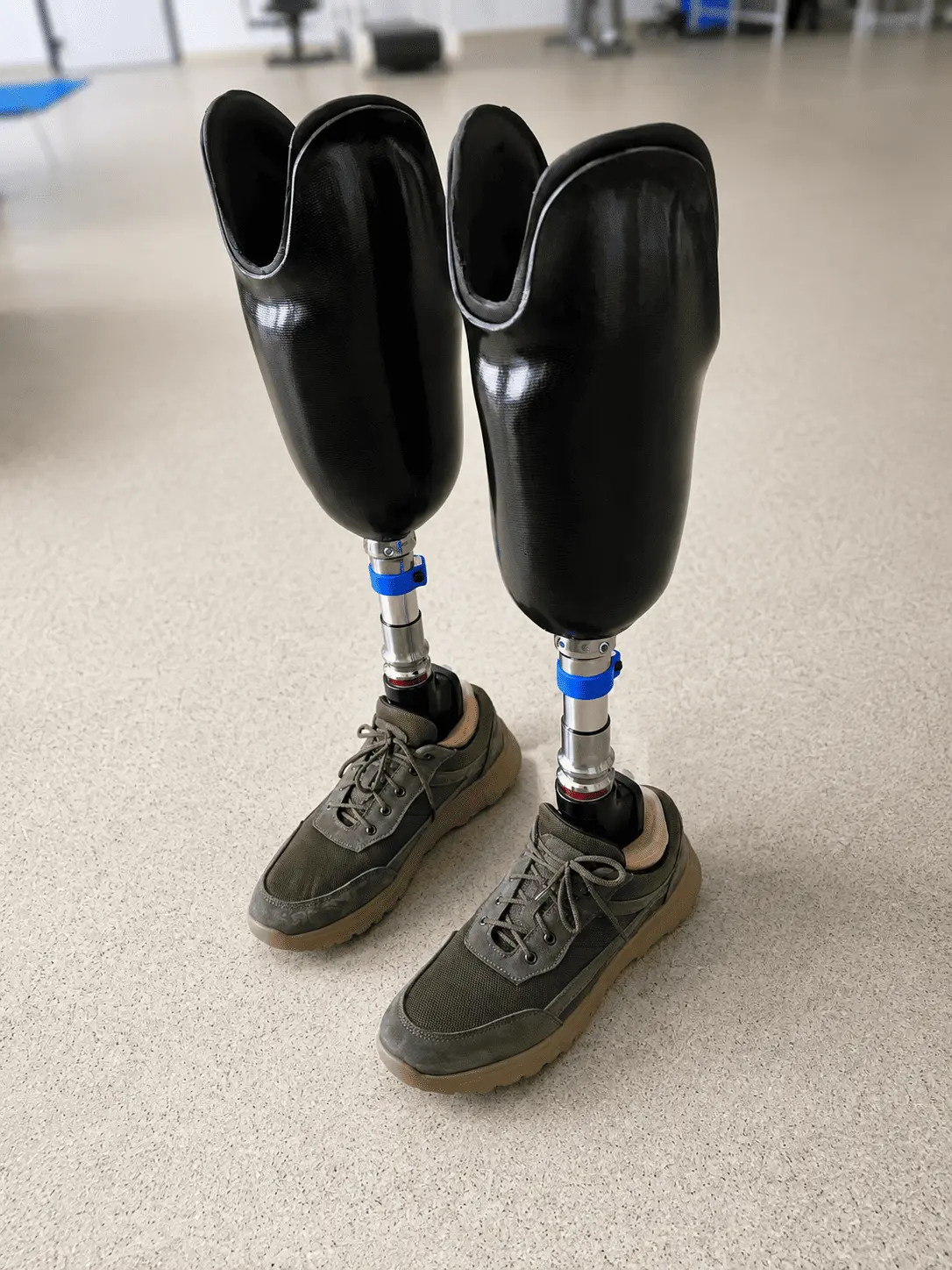
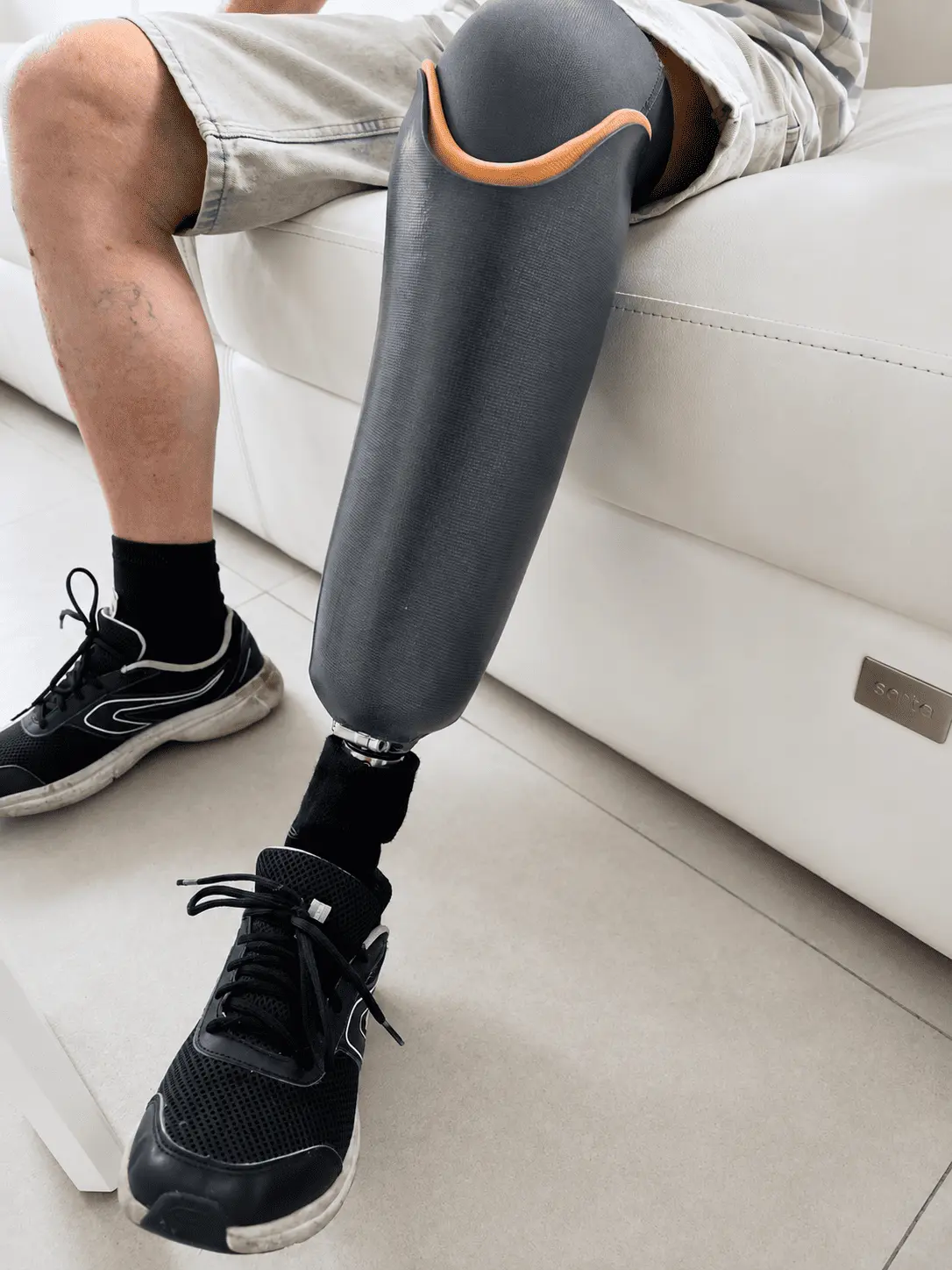
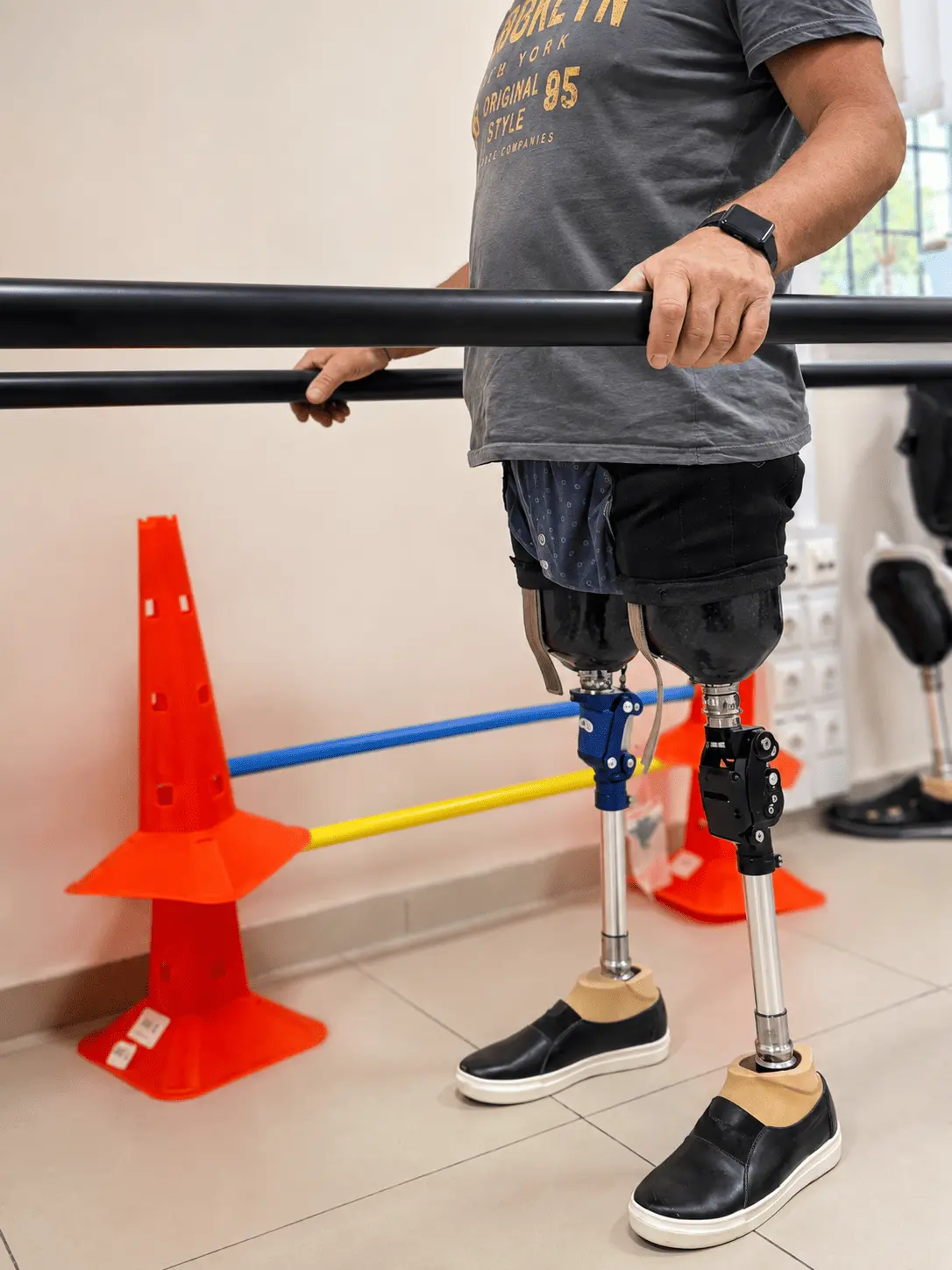
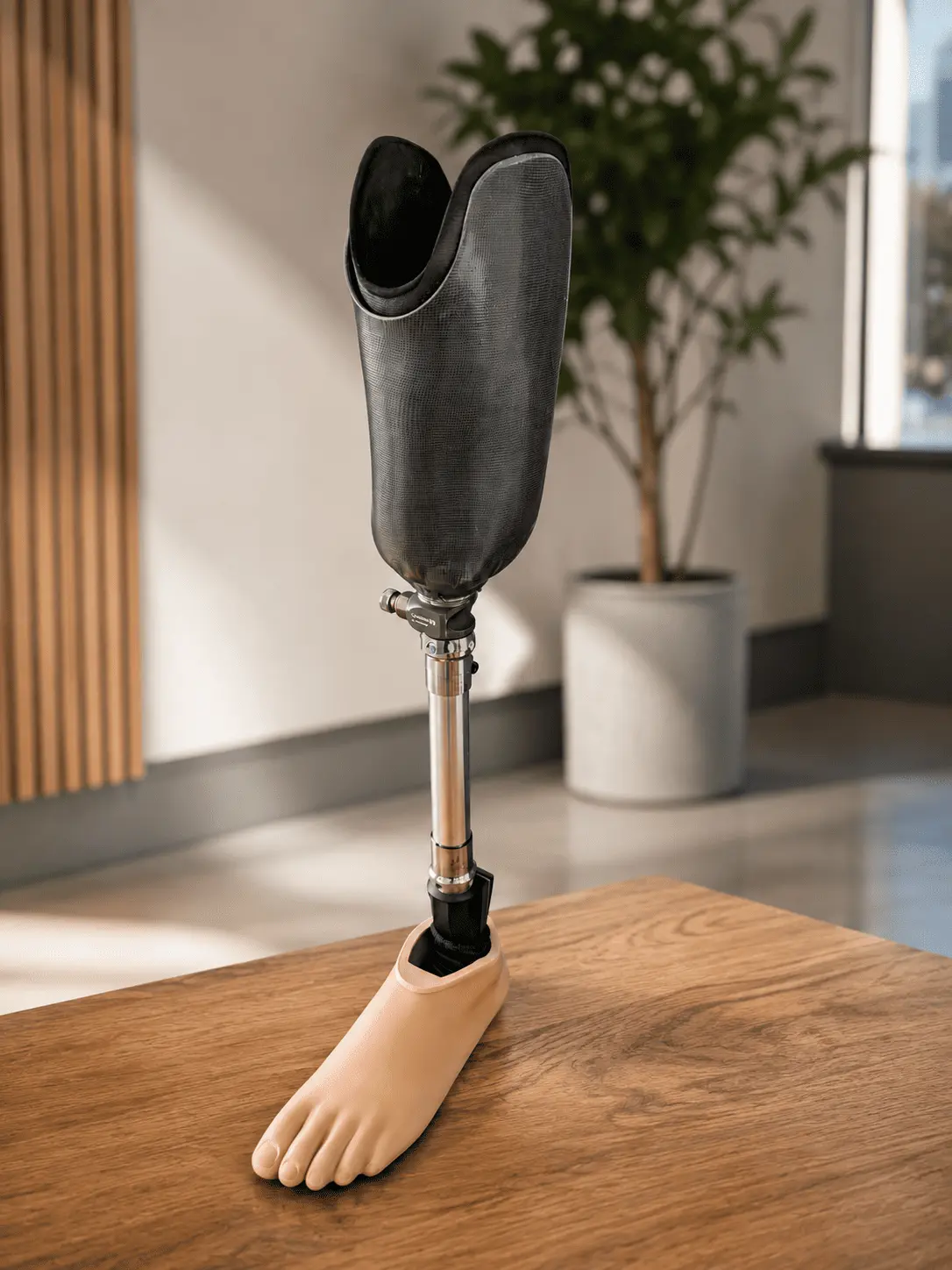
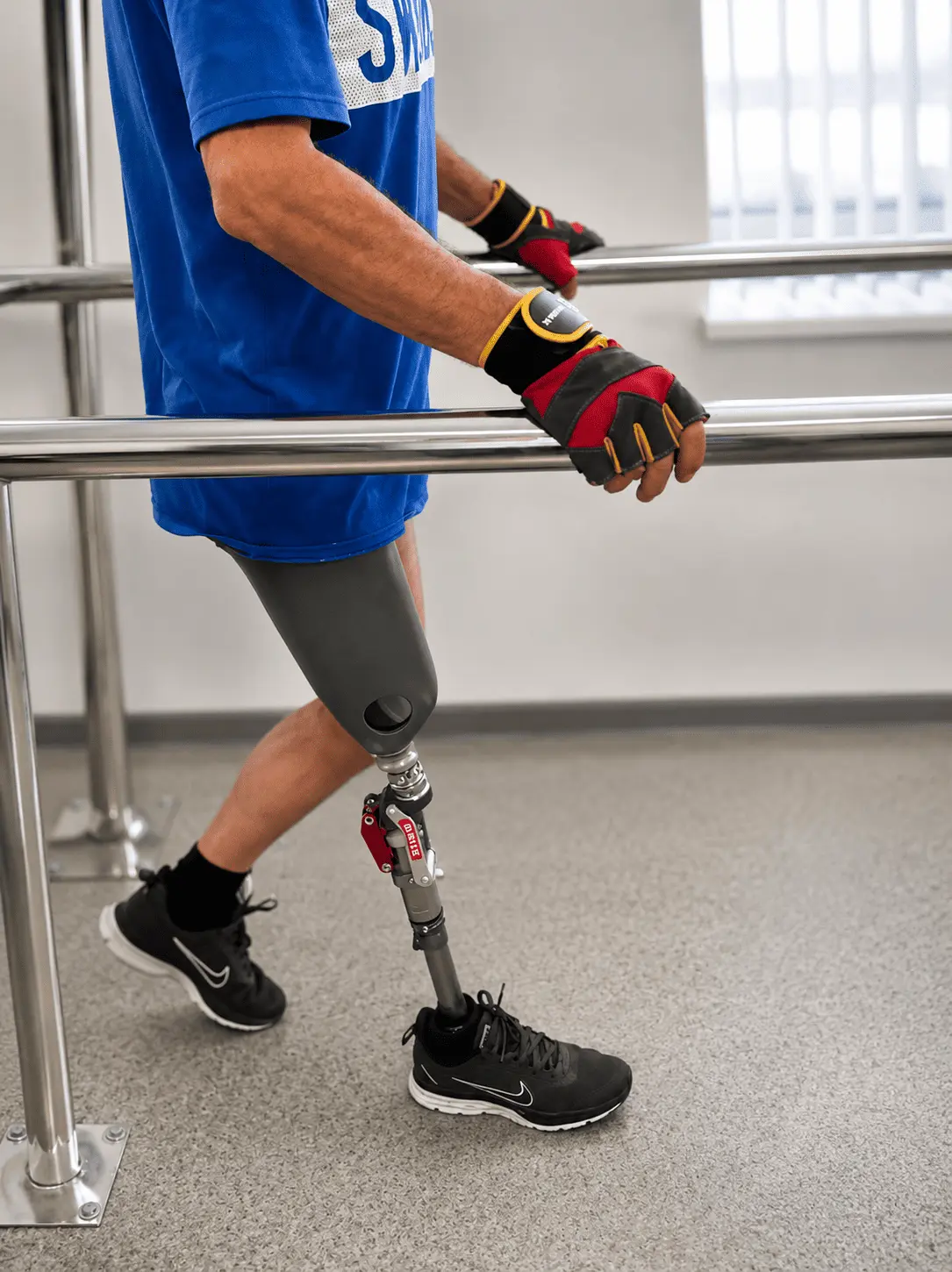
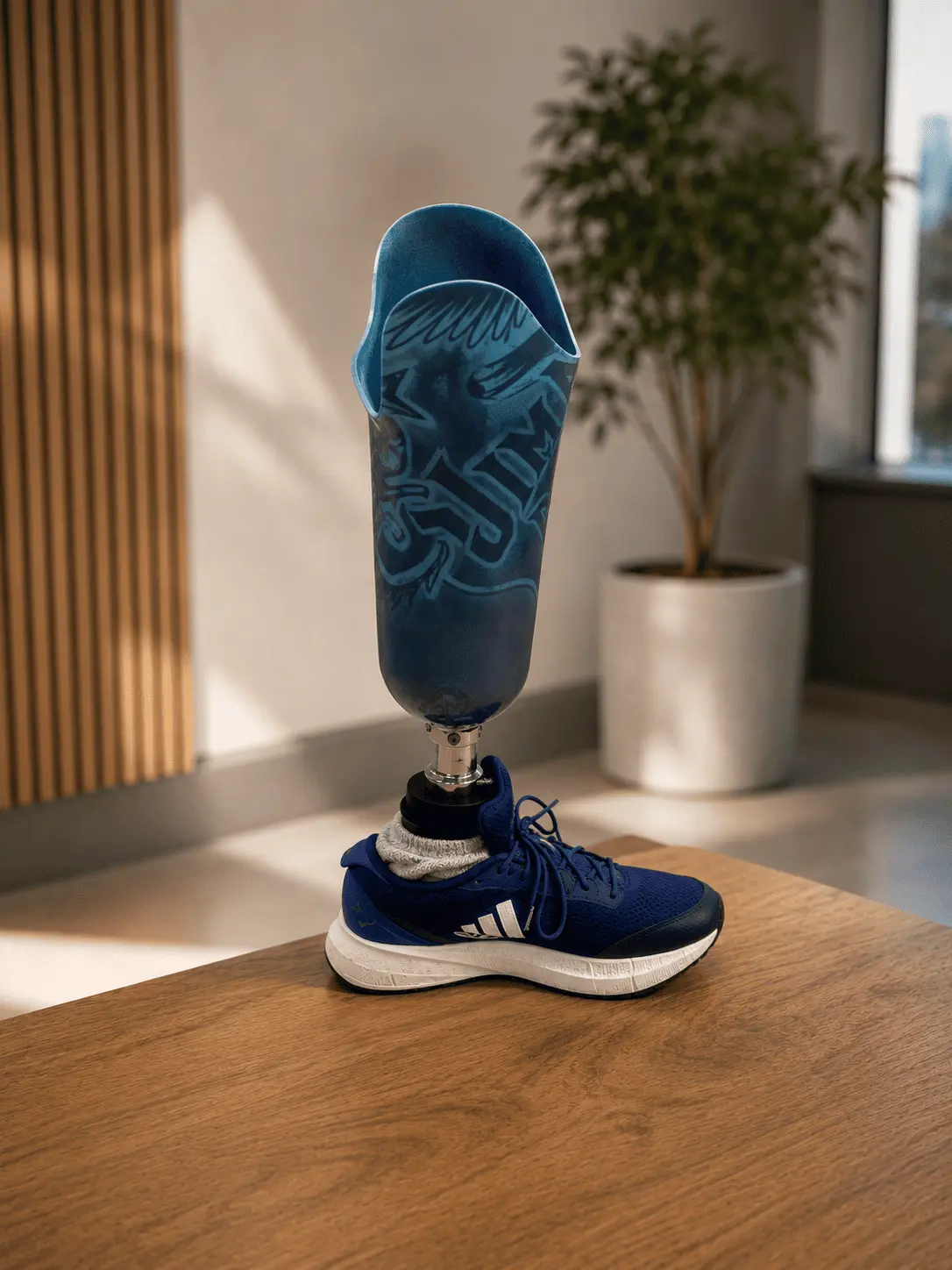
Examples of finished prostheses

Videos of our clients

Frequently asked questions

Is it possible to learn to walk after disarticulation at the hip joint?

Yes. Although this level of amputation is considered one of the most complex, modern prosthetic technologies and comprehensive rehabilitation allow most patients to regain independent mobility. The speed of adaptation depends on general health, physical fitness and how regularly the patient works with rehabilitation specialists.

How does a hip disarticulation prosthesis differ from a transfemoral prosthesis?

In disarticulation, not only the thigh is absent but the hip joint as well. The prosthesis therefore has a more complex structure and includes a pelvic socket and an artificial hip joint module that compensates for the movements of the lost joint.

Is it possible to stop using crutches after prosthetics?

In many cases, yes. After completing rehabilitation, many patients are able to move independently using the prosthesis. However, the need for additional walking aids is determined individually and depends on the level of physical fitness, age and the features of the amputation.

How long does it take to adapt to the prosthesis?

The adaptation period is individual. On average, the first confident skills in using the prosthesis develop over several weeks or months, although fully mastering the device may take longer. Regular practice significantly speeds up the recovery process.

Is it possible to sit down while wearing the prosthesis?

Yes. Modern designs are developed so that the patient can comfortably sit, stand up and carry out everyday activities. During manufacturing, particular attention is paid to the shape of the pelvic socket and the correct adjustment of all components.

Is it possible to drive a car after prosthetics?

In many cases this is possible after rehabilitation is complete and where there are no medical contraindications. Sometimes the car requires additional modification. The decision is made individually, taking into account the patient’s condition and legal requirements.

Is it possible to play sports after disarticulation?

Yes. After completing rehabilitation, many patients return to an active lifestyle and take up swimming, fitness, cycling and other forms of physical activity. The exercise program is selected individually.

How heavy is a prosthesis after disarticulation?

Modern prostheses are made using lightweight and durable materials. Despite the more complex structure compared with a transfemoral prosthesis, modern components make it possible to reduce the overall weight of the device and make it as convenient as possible for everyday use.

Can a prosthesis after disarticulation be obtained free of charge?

Yes. Where there are medical indications and the necessary documents, patients can receive a prosthesis after disarticulation free of charge under the state program for the provision of technical rehabilitation aids. The specialists at ACRP «Zdorovya» help with the paperwork and support the patient at every stage of obtaining the prosthesis.

Why is it important to go to a specialized center?

Prosthetics after disarticulation requires extensive experience, modern equipment and highly qualified specialists. The All-Ukrainian Center for Rehabilitation and Prosthetics «Zdorovya» manufactures such prostheses with an individually selected design, modern components and comprehensive rehabilitation, which makes it possible to achieve the best possible functional result even in the most complex clinical cases.

Hip Disarticulation Prosthesis FREE OF CHARGE in Ukraine

Prosthetics after disarticulation at the hip joint

Free consultation with an orthopedic doctor

Branches in Kyiv, Odesa and Rivne.