A semi-rigid corset is a medical orthopaedic device used to support, fix and offload the spine. It provides more pronounced stabilisation than an elastic corset-bandage, while remaining more comfortable for everyday use than rigid designs.
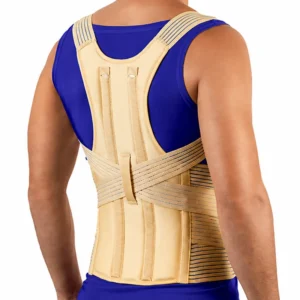
This type of corset may be used for back pain, spinal conditions, lower back overloading, after injuries, surgery and during rehabilitation.
A semi-rigid orthopaedic corset helps reduce the load on the spine, maintain the torso in a more correct position, restrict unwanted movements and create safer conditions for recovery.
At our centre you can obtain a semi-rigid corset free of charge under the government rehabilitation aid programme. We assist with orthopaedic consultation, device selection and documentation.
This type of device is commonly known by several names:
Indications
A semi-rigid back corset may be prescribed:
After Injuries and Surgery
Pain and Overloading
Conditions and Instability
Rehabilitation and Prevention
The corset helps support the spine, reduce the load on the muscles and joints, ease discomfort and make movement safer.
How It Works
The primary purpose of the semi-rigid corset is to provide the spine with stable support and reduce the load on the affected area.
A semi-rigid corset helps:
support the spine;
reduce the load on the back;
ease pain and discomfort;
restrict sudden and unwanted movements;
maintain the torso in a correct position;
reduce muscle overloading;
stabilise the affected area;
protect the back from recurring overloading;
create conditions for recovery after injuries and surgery.
Purpose
A semi-rigid corset is used when the spine needs more pronounced support than an elastic bandage can provide.
This option may be recommended for pain, instability, spinal overloading, after injuries and surgery, and during the recovery period, when it is important to restrict movements that may worsen pain or hinder rehabilitation.
A semi-rigid orthopaedic corset helps support the back, offload the affected area and lower the risk of recurring strain.
Important
For pain, injuries, surgery or spinal conditions, the back may require additional stabilisation.
If the spine is overloaded and the muscles fail to provide sufficient support, pain and discomfort may persist longer. In such cases, a semi-rigid corset helps reduce the load, support the torso, restrict unwanted movements and make recovery safer.
Timely use of an orthopaedic corset helps create more stable conditions for recovery and reduce the risk of recurring back strain.
Applications
Comparison
The choice between an elastic bandage and a semi-rigid corset depends on the diagnosis, level of pain, the required degree of fixation and the specialist’s recommendations.
Classification
Semi-rigid corsets may differ in level of support, design and fixation zone.
Correct Selection
A semi-rigid corset must be selected individually. It is important to consider the diagnosis, area of pain, spinal condition, level of fixation and the purpose of using the device.
Selection takes into account:
diagnosis;
area of pain or discomfort;
condition of the spine;
level of pain;
presence of injury or surgery;
condition of the back muscles;
postural characteristics;
level of physical activity;
rehabilitation stage;
need for movement restriction;
device size and fit;
physician’s recommendations.
⚠️ An incorrectly selected back corset may:
Free of Charge
At our centre you can receive a free orthopaedic consultation.
During the consultation, the specialist will:
Pricing
The cost of a semi-rigid corset depends on the type of device, support zone, fixation level, materials, size, fabrication complexity and individual patient characteristics.
The price may vary depending on whether the patient requires a semi-rigid lumbar corset, a spinal corset, a post-surgical corset or an individually fitted orthopaedic construction.
The exact cost is determined following examination, orthopaedic consultation and device selection.
Free of Charge
Our centre offers free provision of a semi-rigid corset under the government rehabilitation aid programme.
FAQ
Answers to common questions
An ordinary belt most often provides light support and warmth. A semi-rigid corset offers more pronounced fixation, helps stabilise the spine and restricts unwanted movements.
A semi-rigid corset may be needed for back pain, spinal conditions, lower back overloading, after injuries, surgery and during rehabilitation.
Yes, a semi-rigid corset may be used for lower back pain if it is correctly selected and recommended by a specialist. It helps offload the lumbar region and support the back.
An elastic bandage provides gentle support and compression. A semi-rigid corset offers stronger fixation and is used when the spine requires additional stabilisation.
Yes. After surgery, a semi-rigid corset may be used to protect tissues, fix the spine, restrict movement and support gradual recovery.
The wearing period depends on the diagnosis, spinal condition, level of pain, surgery or injury and the specialist’s recommendations. Some patients need the corset only during activity; others require it throughout the recovery period.
A correctly fitted corset supports the back, does not chafe the skin, does not press too tightly, does not interfere with breathing or movement, does not cause numbness and helps reduce discomfort.
Yes. Where medical indications and the required documents are in place, a semi-rigid corset can be obtained free of charge under the government rehabilitation aid programme.