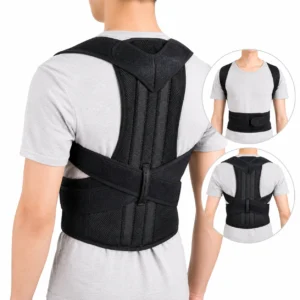
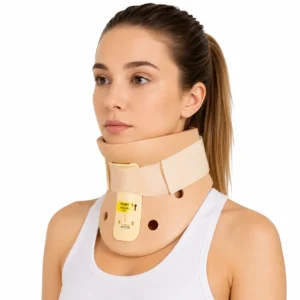
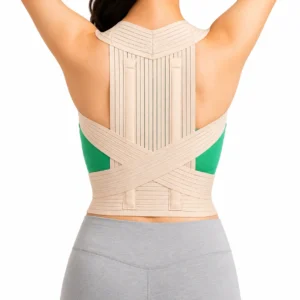
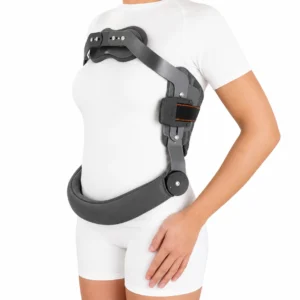
Spinal orthoses are used to support and stabilize the spinal column, reduce the load on the muscles and joints of the back, and relieve pain and discomfort during movement.
These devices help restrict unwanted movements, maintain the spine in the correct position and create more comfortable conditions for recovery after injuries, surgeries and diseases of the musculoskeletal system.
Spinal orthoses are used in orthopedics, traumatology, neurology and rehabilitation both during treatment and throughout the recovery period.
A spinal orthosis is a medical orthopedic device designed to stabilize and support a specific section of the spine.
Depending on its design, an orthosis can:
Spinal orthoses differ from joint orthoses in that they work not with an individual joint or limb, but with an entire section of the spine and the back muscles.
Unlike orthoses for the knee, wrist or ankle, spinal orthoses:
Spinal orthoses may be prescribed for:
Main types
Provides support and light stabilization.
Used for prevention and with moderate back loads.
Limits a range of movements and reduces the load on the spine.
Used for: pain, spinal instability, and during the recovery period.
Maximally restricts movement.
Used: after surgeries, for fractures, and for serious spinal injuries.
Selecting a spinal orthosis depends on a number of factors that a specialist evaluates during examination.
The selection takes into account:
An incorrectly fitted orthosis may:
Custom fabrication tailored to each patient’s individual needs
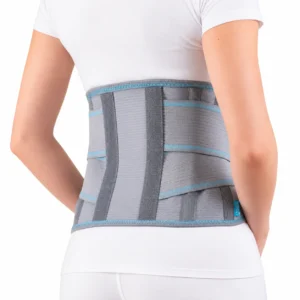
Used to support the lumbar spine and reduce the load on the back. Prescribed for:
Help reduce lumbar load, relieve pain and support the spine.
Provide more pronounced stabilization and reduced spinal load. Help to:
At our center you can receive a free orthopedic consultation.
During the consultation the specialist will:
In cases of spinal disease and overload, the absence of adequate support can intensify pain and increase the strain on the back muscles and joints.
An orthosis helps to:
The cost of a spinal orthosis depends on: the type of design, fixation level, degree of spinal support, materials used, fabrication complexity, and the patient’s individual characteristics.
Approximate cost of spinal orthoses in Ukraine
Our center offers free provision of spinal orthoses under the government rehabilitation aid program. We help patients complete every step of the process — from consultation to receiving the device.
Who is eligible to receive an orthosis free of charge
The following are entitled to receive one:
“All-Ukrainian Center for Rehabilitation and Prosthetics “ZDOROVIA” LLC provides free individual services to persons with disabilities, supplying them with prosthetic and orthopedic devices.
Our work is built on the extensive experience of our European partners, enabling us to produce comfortable and adapted prosthetic and orthopedic devices that fully meet the needs of persons with disabilities.
We have built a team of professionals with years of experience and a commitment to fulfilling every wish of our patients.
If you need an orthosis for the knee joint, ankle, wrist, or lumbar spine — contact our center.
👉 Sign up for a free orthopedic consultation and get assistance with selecting and obtaining an orthosis under the state program.
Answers to common questions about spinal orthoses
❓ Can a spinal orthosis replace medical treatment?
No. An orthosis helps support the spine, reduce load and ease the condition, but it is part of a comprehensive treatment and rehabilitation plan.
❓ What happens if an orthosis is not used when needed?
Lack of adequate support can increase spinal load, worsen pain and slow recovery after injuries and surgeries.
❓ Can an incorrect orthosis cause harm?
Yes. An incorrectly fitted model or degree of fixation can cause discomfort, insufficient support or excessive restriction of movement.
❓ Is there an adjustment period for a spinal orthosis?
In the first few days, unfamiliar support and restricted movement may be felt. Adaptation usually occurs gradually with regular use.
❓ Can the orthosis be worn only during physical activity?
Yes. In many cases an orthosis is recommended specifically during physical activity, prolonged sitting, work or back loading.
❓ Does an orthosis help with desk work?
Yes. An orthosis helps reduce the load on the lumbar region and support the back during prolonged sitting.
❓ Can an orthosis be worn while driving?
This depends on the orthosis model and fixation level. Some devices are suitable for use during journeys and prolonged sitting.
❓ Will back muscles weaken from wearing an orthosis?
With correct use and adherence to a specialist’s recommendations, an orthosis should not cause significant muscle weakening. It is typically used as part of a comprehensive rehabilitation program.
❓ Can an orthosis be used during physical activity and heavy lifting?
Yes. Lumbosacral orthoses are frequently used to provide additional back support during physical exertion.
❓ Can an orthosis be worn under clothing?
Most modern orthoses have an anatomical shape and are suitable for wearing under everyday clothing.
❓ Should the orthosis be removed during rest or sleep?
The wearing schedule is determined individually and depends on the diagnosis, orthosis model and the specialist’s recommendations.
❓ How can I tell if an orthosis has been fitted correctly?
A correctly fitted orthosis provides support and fixation without marked discomfort, excessive pressure or impaired movement.