Wrist and hand orthosis

Types and functionality

Wrist and Hand Orthosis — Hand Support After Injuries, Surgery and Overuse

A wrist and hand orthosis is an orthopedic device used to immobilize, stabilize and offload the wrist joint, hand and tendons of the arm.
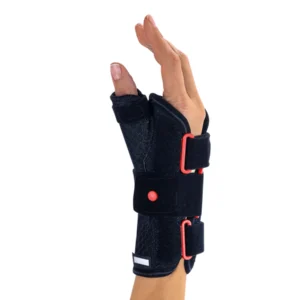
This orthosis helps reduce pain, restrict unwanted movements, decrease joint load and create safer conditions for recovery after injuries, surgery, inflammation and chronic overuse.

The orthosis immobilizes and offloads:

hand wrist wrist joint arm tendons

At our centre you can receive a wrist and hand orthosis free of charge under the state rehabilitation programme. We assist with orthopaedic consultation, device selection and paperwork.

Our centre provides:

  • free orthopaedic consultation;
  • orthosis selection based on diagnosis and patient condition;
  • assessment of joint and muscle condition of the arm;
  • custom orthosis fabrication tailored to individual needs;
  • assistance with obtaining an orthosis under the state programme.

When Is a Wrist/Hand Orthosis Needed

A hand and wrist orthosis may be used:

  • after hand and wrist joint injuries;
  • after fractures;
  • after surgery on the hand, wrist or forearm;
  • for ligament sprains;
  • for tendon inflammation;
  • for wrist pain;
  • for joint instability;
  • for carpal tunnel syndrome;
  • for hand overuse at work;
  • for sports injuries;
  • for hand weakness following neurological conditions;
  • during rehabilitation after injuries and illness.

The orthosis helps keep the arm in the correct position, reduce tissue irritation and decrease load during everyday movements.

How the Orthosis Works

The primary purpose of the orthosis is to stabilize the joint and restrict movements that cause pain or interfere with recovery.

The orthosis helps to:

  • reduce load on the wrist joint;
  • relieve pain and the feeling of instability;
  • restrict painful movements;
  • keep the hand in the correct position;
  • decrease load on ligaments and tendons;
  • improve movement safety;
  • ease daily activities;
  • create conditions for recovery after injuries and surgery.

Depending on the diagnosis, the orthosis may be worn continuously during rehabilitation or only during physical activity, manual work, sport or sleep.

What Conditions Call for an Orthosis?

A hand and wrist orthosis can be used in a variety of situations

💻

Pain and Overuse

  • prolonged computer work;
  • repetitive hand movements;
  • occupational hand strain;
  • chronic wrist discomfort.
🔀

Carpal Tunnel Syndrome

  • at night;
  • during computer work;
  • with finger numbness;
  • with hand pain and discomfort.
🤕

After Injury

  • ligament sprains;
  • after hand fractures;
  • joint instability;
  • sports injuries.
🏥

Surgery and Rehabilitation

  • after hand surgery;
  • after wrist surgery;
  • during rehabilitation.

The orthosis helps keep the arm in the correct position, reduce tissue irritation and decrease load during everyday movements.

Orthosis for Pain and Overuse

Wrist pain often develops due to constant hand strain: computer work, repetitive movements, physical labour, sport or lifting heavy objects.

In such cases the orthosis helps reduce load on the joint and tendons. It keeps the hand in a safer position and lowers the risk of increased pain during movement.

The orthosis is especially relevant for:

  • prolonged work with a mouse and keyboard;
  • repetitive hand movements;
  • occupational hand strain;
  • sports activities;
  • pain after overexertion;
  • chronic wrist discomfort.

Orthosis for Carpal Tunnel Syndrome

In carpal tunnel syndrome the hand often needs additional support. The orthosis helps hold the wrist in a neutral position and reduces pressure in the area where the nerve passes.

These orthoses are commonly used:

  • at night;
  • during computer work;
  • with repetitive hand movements;
  • with finger numbness;
  • with hand pain and discomfort.

Orthosis selection for carpal tunnel syndrome must be carried out individually to ensure the device supports the joint without impairing circulation.

Orthosis After Hand Injury

After injuries to the hand, wrist, ligaments or tendons, the arm often requires immobilization. Even minor movements can stress damaged tissues and slow down recovery.

The orthosis helps to:

  • stabilize the injured area;
  • reduce pain;
  • restrict unnecessary movements;
  • lower the risk of re-injury;
  • keep the arm in the correct position;
  • make the recovery period more comfortable.

Orthosis After Hand or Wrist Surgery

After surgery, an orthosis may be used to protect tissues, restrict movement and gradually restore hand function.

It helps control hand position, reduce load on the operated area and provide the necessary degree of immobilization during rehabilitation.

The orthosis design is selected based on the type of surgery, tissue condition, pain level and the physician’s recommendations.

What Orthoses Do We Fabricate?

Custom fabrication tailored to each patient’s individual needs

✅ What we fabricate

Our centre fabricates:

  • wrist orthosis;
  • hand orthosis;
  • wrist joint orthosis;
  • soft supportive models;
  • semi-rigid orthoses;
  • reinforced models for pronounced instability;
  • custom devices adapted to individual anatomy.

✅ Design selection

The design is selected based on the diagnosis, pain level, activity demands, recovery stage and the required degree of support.


Orthosis Support Levels

🟢

Soft Support

Used for mild pain, overuse, injury prevention and moderate joint support.

🟡

Semi-Rigid Support

Applied for injuries, tendon inflammation, joint instability, after surgery and during the recovery period.

🔴

Reinforced Support

Used when more pronounced movement restriction and stable support of the injured area are required.

How the Orthosis Is Selected

The orthosis is selected individually. It is important to consider not only hand size but also diagnosis, support level, pain, activity load and the purpose of use.

Selection takes into account:

  • location of pain or injury;
  • condition of the hand and wrist;
  • level of arm activity;
  • rehabilitation stage;
  • degree of joint instability;
  • need to restrict movement;
  • patient’s individual anatomy;
  • physician’s recommendations.

An incorrectly fitted orthosis may:

  • press and chafe the skin;
  • impair circulation;
  • provide insufficient joint support;
  • reduce the effectiveness of recovery.

That is why fitting is best done after a specialist consultation.

Free Orthopaedic Consultation

At our centre you can receive a free orthopaedic consultation.

During the consultation the specialist will:

  • carry out an examination;
  • assess the condition of the hand and wrist;
  • determine whether an orthosis is needed;
  • select the appropriate model;
  • determine the level of support;
  • provide wearing instructions;
  • advise on obtaining an orthosis under the state programme.

Why It Is Important Not to Delay Hand Support

With injuries, pain, tendon inflammation or joint instability, the hand continues to be involved in almost every daily movement. Without support the injured area may be constantly overloaded.

The orthosis helps to:

  • reduce pain;
  • decrease joint load;
  • protect ligaments and tendons;
  • prevent re-injury;
  • ease arm movement;
  • speed up recovery;
  • make rehabilitation more comfortable.

Early use of an orthosis helps create safer conditions for restoring hand function.

Wrist and Hand Orthosis — Price in Ukraine

The cost of an orthosis depends on: design type, support level, materials used, fabrication complexity and patient’s individual needs.

Approximate cost of wrist and hand orthoses

Wrist and Hand Orthosis

  • soft supportive models — from 1,200 UAH;
  • semi-rigid orthoses — from 2,500 UAH.
💪

Reinforced Custom Designs

Cost is determined after consultation and device selection.

📋

Exact Cost

The exact cost is determined after consultation and device selection.

Free Wrist and Hand Orthosis Under the State Programme

At our centre it is possible to receive an orthosis free of charge under the state rehabilitation aid programme.
Who Can Receive a Free Orthosis

  • people with disabilities;
  • children with disabilities;
  • patients after injuries and surgery;
  • military personnel;
  • patients with musculoskeletal disorders;
  • people requiring rehabilitation according to medical indications.

How to Obtain an Orthosis Under the Programme

If you need a hand orthosis — contact our centre. We assist with orthopaedic consultation, device selection and paperwork.

Get a Consultation

If you need an orthosis — contact our centre.

👉 Book a free orthopaedic consultation and get assistance with selecting, fabricating and obtaining an orthosis under the government programme.

Frequently Asked Questions About Wrist and Hand Orthoses

Answers to common questions

How does a wrist orthosis differ from a regular elastic bandage?

An elastic bandage mainly provides compression and light support. An orthosis offers more stable immobilization, can restrict specific movements and is better suited after injuries, surgery, and for pain and joint instability.

When is a hand orthosis needed?

A hand orthosis may be needed after injuries, surgery, fractures, sprains, tendon inflammation, for pain, overuse, carpal tunnel syndrome and wrist joint instability.

Can an orthosis be worn for carpal tunnel syndrome?

Yes. For carpal tunnel syndrome an orthosis helps keep the hand in a more neutral position and reduces pressure on the wrist area. These devices are often used at night or during manual work.

Can I work at a computer while wearing an orthosis?

In many cases yes. An orthosis can be used while working with a mouse and keyboard to reduce load on the wrist joint. It all depends on the design of the device and the specialist’s recommendations.

How long does an orthosis need to be worn?

The wearing period depends on the diagnosis, pain, injury, surgery and recovery stage. Some patients need the orthosis only during physical activity, while others wear it throughout the entire rehabilitation period.

Can an orthosis be worn only at night?

Yes, in some cases the orthosis is used exclusively at night — for example with carpal tunnel syndrome, pain or an incorrect hand position during sleep. The wearing schedule is determined by the specialist.

Does an orthosis help with wrist pain?

An orthosis can help reduce pain if it is related to overuse, instability, tendon inflammation, injury or tissue irritation. It is important to choose the correct level of support.

Can everyday tasks be performed while wearing an orthosis?

Most hand and wrist orthoses allow basic daily activities to be performed. The level of mobility depends on the device design and degree of support.

How can I tell if an orthosis fits correctly?

A correctly fitted orthosis stabilizes the joint, does not cause numbness, does not impair circulation, does not chafe the skin, does not create excessive pressure and helps reduce the feeling of overload.

Can a wrist orthosis be obtained free of charge?

Yes, with the appropriate medical indications and required documents, a wrist and hand orthosis can be obtained free of charge under the state rehabilitation aid programme.