Upper Limb Orthoses

Виды и функциональность

Upper Limb Orthoses — Recovery After Injuries and Surgery

Upper limb orthoses are orthopaedic devices used to immobilise, stabilise and decompress the joints and muscles of the arm.
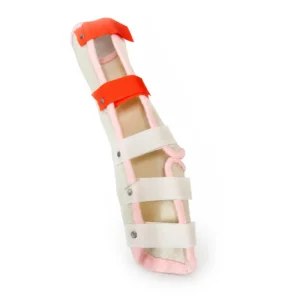
Upper limb orthoses include devices for:

the hand the wrist the forearm the elbow joint specific sections of the arm

Such orthoses help relieve pain, restrict unwanted movements and create conditions for safe recovery after injuries, surgery and disorders of the joints and tendons.

Upper limb orthoses are used in orthopaedics, traumatology, neurology, sports medicine and rehabilitation.

Our centre provides:

  • free orthopaedic consultation;
  • selection of an orthosis based on diagnosis and patient condition;
  • assessment of joint and arm muscle condition;
  • fabrication of the orthosis tailored to individual needs;
  • assistance with obtaining an orthosis under the government programme.

What Are Upper Limb Orthoses?

Upper limb orthoses are orthopaedic devices used to immobilise, stabilise and decompress the joints and muscles of the arm.

Such orthoses help relieve pain, restrict unwanted movements and create conditions for safe recovery after injuries, surgery and disorders of the joints and tendons.

Upper limb orthoses are used in orthopaedics, traumatology, neurology, sports medicine and rehabilitation.

How Do Upper Limb Orthoses Work?

The primary purpose of an orthosis is to stabilise a joint or part of the limb and reduce the load on damaged tissues.

Orthoses help:

  • restrict painful movements;
  • reduce the load on joints and tendons;
  • relieve pain and the feeling of instability;
  • support the arm in the correct position;
  • improve movement safety;
  • ease everyday activities;
  • create conditions for recovery after injuries and surgery.

Some models are worn only during activity; others are used throughout the entire rehabilitation period.

When Is an Upper Limb Orthosis Prescribed?

Upper limb orthoses may be prescribed:

🤕

Injuries

  • after hand and forearm injuries;
  • for sprains and ligament damage;
  • after fractures;
  • for sports injuries.
🔥

Inflammation & Pain

  • tendon inflammation;
  • joint pain and instability;
  • carpal tunnel syndrome;
  • overloading of arm joints and muscles.
🏥

Surgery & Rehabilitation

  • after surgery;
  • during rehabilitation.
🧠

Neurology

  • neurological disorders.

In many cases, an orthosis helps reduce the load on the affected area and speed up recovery of arm function.

Hand & Wrist Orthoses

Hand and radiocarpal joint orthoses are among the most widely used devices for the upper limb.

They are indicated for:

  • after hand injuries;
  • tendon inflammation;
  • wrist pain;
  • after surgery;
  • carpal tunnel syndrome;
  • joint instability;
  • overloading of the hand during work.

These orthoses help reduce the load on the hand and restrict movements that cause pain and discomfort.

Forearm Orthoses

Forearm orthoses are used for additional immobilisation and stabilisation of the arm following injuries and surgery.

They help:

  • reduce the load on muscles and ligaments;
  • restrict unwanted movements;
  • support the limb in the correct position;
  • facilitate recovery after injury.

Upper Limb Orthoses We Fabricate

Custom fabrication tailored to each patient’s individual needs

✅ What We Fabricate

Our centre fabricates:

  • hand orthoses;
  • wrist orthoses;
  • stabilising devices for upper limb joints;
  • soft and semi-rigid models.

✅ Device Selection

Selection of the design depends on the diagnosis, activity level and the required degree of fixation.


Levels of Fixation for Upper Limb Orthoses

🟢

Soft Fixation

Used for light joint support and prevention of overloading.

🟡

Semi-Rigid Fixation

Provides more pronounced stabilisation and restriction of movement.

Indicated for: injuries, during recovery, joint instability and post-operative care.

🔴

Reinforced Fixation

Used when maximum stabilisation of the affected area is required.

How Are Upper Limb Orthoses Selected?

Selection of the device depends on a number of individual factors assessed by the specialist during examination.

Selection depends on:

  • diagnosis;
  • location of the injury;
  • degree of pain;
  • activity level;
  • stage of rehabilitation;
  • patient’s anatomical features;
  • required degree of fixation.

An incorrectly selected orthosis may:

  • fail to stabilise the joint adequately;
  • cause discomfort;
  • restrict blood circulation;
  • reduce the effectiveness of recovery.

That is why selection should always be carried out together with a specialist.

Free Orthopaedic Consultation

At our centre you can receive a free orthopaedic consultation.

During the consultation, the specialist will:

  • conduct an examination;
  • assess the condition of the arm’s joints and muscles;
  • determine whether an orthosis is required;
  • select the most suitable model;
  • determine the required level of fixation;
  • provide guidance on wearing the orthosis;
  • advise on obtaining the device under the government programme.

Why Timely Use of an Orthosis Matters

After injuries, surgery and in cases of joint conditions, the arm often requires additional support and load restriction.

An orthosis helps:

  • relieve pain;
  • reduce the load on joints and tendons;
  • prevent repeated injury;
  • improve movement safety;
  • speed up recovery;
  • ease everyday activities.

Timely use of an orthosis helps create more comfortable conditions for rehabilitation and recovery of arm function.

Upper Limb Orthoses — Pricing in Ukraine

The cost of an orthosis depends on: the type of design, degree of fixation, materials used, fabrication complexity and the patient’s individual characteristics.

Approximate pricing for upper limb orthoses

Hand & Wrist Orthoses

  • light stabilising models — from 1,200 UAH;
  • semi-rigid orthoses — from 2,500 UAH.
💪

Forearm Orthoses

  • standard models — from 2,000 UAH;
  • reinforced designs — from 4,000 UAH.
📋

Exact Price

The exact cost is determined following consultation and device selection.

Free Provision of an Arm Orthosis Under the Government Programme

Our centre offers free provision of upper limb orthoses under the government rehabilitation aid programme.

Get a Consultation

If you need an orthosis for your hand or arm — contact our centre.

👉 Book a free orthopaedic consultation and get assistance with selecting and obtaining an orthosis under the government programme.

Frequently Asked Questions About Upper Limb Orthoses

Answers to common questions

Why is it important to restrict movement after hand and wrist injuries?

Even small hand movements place constant strain on the joints, ligaments and tendons. Without fixation, damaged tissues continue to be irritated, causing pain and inflammation to persist longer. An orthosis helps stabilise the hand and reduce the load during everyday activities.

How does a hand orthosis differ from an ordinary elastic bandage?

An elastic bandage mainly provides compression and light support. An orthosis offers more stable joint fixation, can restrict specific movements and is better suited for recovery after injuries, surgery and pronounced instability.

Why are hand orthoses commonly prescribed for computer work?

Prolonged use of a mouse and keyboard places constant strain on the radiocarpal joint and tendons. With inflammation, carpal tunnel syndrome or chronic overloading, an orthosis helps reduce the load on the hand and decrease tissue irritation.

Can an orthosis be used for carpal tunnel syndrome?

Yes. For carpal tunnel syndrome, an orthosis helps keep the hand in a more neutral position and reduce pressure on the nerve. These orthoses are particularly common for use at night or during manual work.

Why is an orthosis often prescribed instead of a cast after hand and forearm surgery?

In many cases, modern orthoses provide the necessary fixation while offering greater comfort, access to the skin and the ability to monitor tissue condition throughout recovery.

Can an orthosis help with hand weakness following neurological disorders?

Yes. Certain orthoses are used to support the hand and forearm in neurological conditions where movement control is reduced or joint instability develops.

Why is it important to choose the right level of fixation for wrist pain?

Insufficient fixation may not reduce joint load, while overly rigid fixation can restrict movement more than necessary. For the hand, it is especially important to maintain the right balance between support and arm functionality.

Can I use my phone and carry out daily tasks while wearing an orthosis?

Most modern upper limb orthoses allow partial finger mobility and the ability to perform basic everyday tasks. However, this depends on the design of the device and the level of fixation.

Does an orthosis help reduce strain during physical work with the hands?

Yes. With repetitive movements, heavy lifting or strain on the hand, an orthosis helps stabilise the joint and reduce overloading of the tendons and ligaments.

Why is it important not to delay fixation after an arm injury?

If a joint or tendons continue to be overloaded after injury, inflammation and instability can worsen. Timely fixation helps create safer conditions for tissue recovery.

Can I wear an orthosis only during activity?

Yes. In many cases an orthosis is used specifically during manual work, sport, prolonged load or repetitive movements, when the joint requires additional support.

How do I know the orthosis has been correctly fitted?

A correctly fitted orthosis:

  • stabilises the joint;
  • reduces the feeling of overload;
  • does not cause numbness;
  • does not restrict blood circulation;
  • does not create excessive pressure;
  • allows permitted arm movements to be performed safely.