Rehabilitation after amputation
What is a residual limb after amputation: shaping, care and preparation for prosthetic fitting
The condition of the residual limb largely determines the comfort and functionality of the future prosthesis
After an amputation, the part of the arm or leg that remains once a segment of the limb has been surgically removed is called a stump. In modern medical and rehabilitation terminology the term «residual limb» is also widely used.
The condition of the residual limb is of great importance for a person’s further recovery. How the surgical wound heals, how the swelling subsides, how the scar forms, how joint mobility is preserved and how the volume of the tissues changes all largely determine whether a prosthesis can be used comfortably.
Preparation for prosthetic fitting does not begin when the prosthesis is manufactured, but much earlier — already during recovery after the amputation.
What is a residual limb after amputation
The residual limb is the part of the limb that remains after amputation. It includes bone structures, muscles, blood vessels, nerves, subcutaneous tissue and skin.
For example:
- after amputation of the leg below the knee, a transtibial residual limb remains;
- after amputation above the knee — a transfemoral residual limb;
- after amputation of the arm below the elbow — a transradial residual limb;
- after amputation above the elbow — a transhumeral residual limb.
Depending on the level of amputation, the condition of the tissues and the reason for surgery, the length and shape of the residual limb differ considerably from patient to patient.
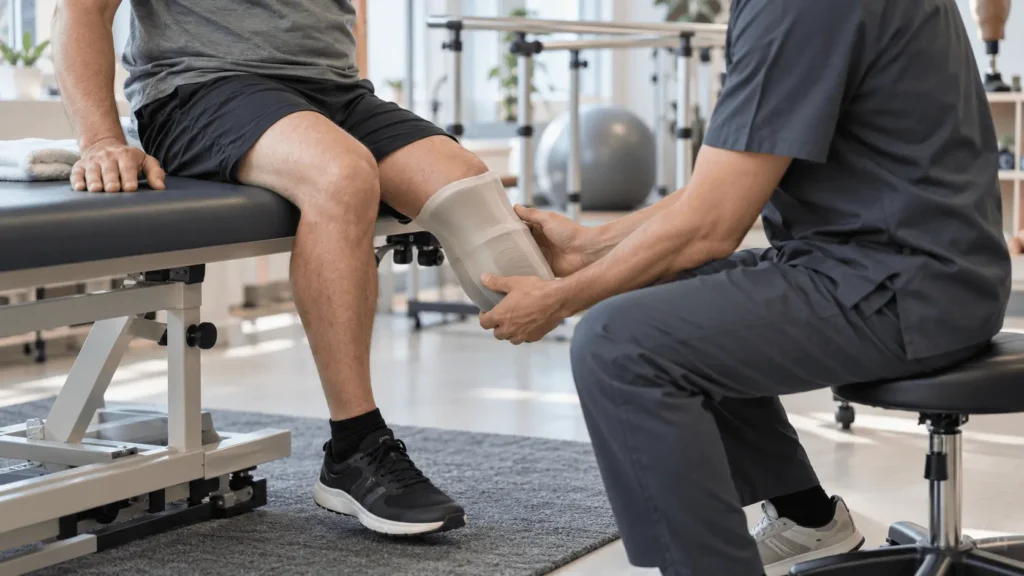
It is the residual limb that interacts with the socket of the future prosthesis, so its condition directly affects the comfort, suspension and functionality of the prosthetic system.
How the residual limb takes shape
The residual limb does not take its final shape immediately after surgery.
In the first days and weeks after amputation there is usually postoperative swelling. As the tissues heal and the body recovers, the volume of the residual limb gradually decreases and changes.
This process is known as shaping or maturation of the residual limb.
Several important processes take place after surgery:
- the surgical wound heals;
- the swelling subsides;
- the postoperative scar forms;
- the volume of soft tissue changes;
- the muscles adapt to the new conditions;
- sensitivity gradually returns;
- the body adapts to the change in biomechanics;
- the tissues are prepared for the future load inside the prosthesis.
Even after the initial recovery, the volume of the residual limb may continue to change over a long period. That is why regular monitoring and adjustment of the socket fit are especially important in the early stages of prosthetic use.
What the condition of the residual limb depends on
Recovery after amputation is influenced by many factors.
Among them:
- the reason for the amputation;
- the level of amputation;
- the extent of the surgery;
- the state of blood circulation;
- the presence of soft-tissue injuries;
- the condition of the muscles and nerves;
- the patient’s age;
- general health;
- the presence of diabetes or vascular disease;
- how quickly the surgical wound heals;
- the presence of infection;
- the quality of postoperative rehabilitation;
- performing the prescribed exercises;
- swelling control;
- correct positioning of the limb.
This is why two residual limbs following amputation at the very same level may differ significantly in shape, length, skin condition, scar position and prosthetic options.
What a residual limb looks like after amputation
Immediately after surgery the residual limb usually looks different from how it will look several months later.
In the early postoperative period the following may be present:
- swelling;
- a change in skin colour;
- surgical sutures or staples;
- a postoperative dressing;
- increased sensitivity;
- tenderness;
- a feeling of tightness in the tissues.
As the wound heals, the swelling gradually subsides and the shape of the residual limb changes.
The task of the rehabilitation team is to help reach a state in which the tissues are ready for contact with the prosthetic socket and for gradual loading.
Which residual limb is considered ready for prosthetic fitting
There is no single universal «ideal» shape of the residual limb.
Modern technology makes it possible to fit patients with very different levels and features of amputation. However, certain characteristics make the selection and use of a prosthesis easier.
Before prosthetic fitting begins, specialists assess:
- healing of the surgical wound;
- the condition of the skin;
- the condition of the postoperative scar;
- the degree of swelling;
- the shape and volume of the residual limb;
- tenderness;
- sensitivity;
- the range of motion in the joints;
- muscle strength;
- the presence of contractures;
- the patient’s general physical condition.
Prosthetic fitting can begin once the surgical wound has healed sufficiently, the condition of the tissues allows a prosthesis to be worn, the swelling is under control, and the patient has the necessary range of motion and medical clearance. The timing is individual and should not be determined solely by the number of weeks since surgery.
Swelling of the residual limb after amputation
Swelling after amputation is common, especially in the early stage of recovery.
It occurs because of the surgical trauma to the tissues and the accumulation of fluid.
To prepare for prosthetic fitting it is important to bring the swelling under control gradually and to shape the residual limb.
As prescribed by specialists, the following may be used:
- elastic bandaging;
- special compression garments;
- shrinkers;
- certain types of postoperative dressings;
- other methods of compression therapy.
Compression helps to control fluid accumulation and supports the shaping of the residual limb. At the same time, the method of compression and how it is used must be chosen by a specialist, because incorrect bandaging can create excessive pressure on the tissues.
Swelling can also appear from time to time long after the amputation. The volume of the residual limb can be affected by physical activity, ambient temperature, changes in body weight and the fit of the prosthesis.
The postoperative scar on the residual limb
Once the surgical wound has healed, a scar remains.
For future prosthetic fitting it is important to assess:
- its location;
- its mobility;
- tenderness;
- the condition of the surrounding skin;
- the presence of adhesions to deeper tissues.
A scar that is too sensitive or poorly mobile sometimes causes discomfort when the socket is worn.
Once the wound has closed completely and with the permission of the specialists, scar work, massage and desensitisation techniques may be added to the rehabilitation programme.
What is desensitisation of the residual limb
After an amputation, touching the residual limb may feel unusual or unpleasant.
Desensitisation is the gradual adaptation of the tissues and the nervous system to touch and to different kinds of stimulation.
Depending on the stage of recovery, a specialist may recommend gradually introducing:
- light touch;
- gentle rubbing;
- different textures;
- massage;
- light tapping;
- gradually increasing contact with fabrics and with the future components of the prosthesis.
This preparation can make the later contact between the residual limb and the socket more comfortable.
Pain in the residual limb after amputation
After an amputation a person may experience different kinds of sensations.
It is important to distinguish between:
Pain in the residual limb itself
This is pain felt in the part of the limb that is actually there.
It may be related to:
- postoperative healing;
- the condition of the scar;
- skin irritation;
- pressure;
- tissue damage;
- inflammation;
- the condition of the nerves;
- a poorly fitting prosthesis.
Phantom sensations
A person may feel the presence of the removed part of the limb — for example, the position of the fingers or the foot.
Phantom pain
In this case the pain is perceived as coming from the part of the arm or leg that is no longer there.
Residual limb pain and phantom pain are different conditions, and the approach to treating them may differ.
Severe, new, increasing or long-lasting pain must be discussed with the treating physician or the rehabilitation team.
How to care for the residual limb
Proper care of the residual limb is necessary not only in the first weeks after surgery. It remains important once the prosthesis is in use as well.
Once the wound has healed completely, it is generally recommended to keep the skin clean and to inspect the residual limb every day.
Pay particular attention to:
- redness;
- chafing;
- cracks;
- blisters;
- areas of increased pressure;
- skin damage;
- discharge;
- unpleasant odour;
- increased swelling.
The skin must be kept clean and dried thoroughly after washing. If a person is already using a prosthesis, the components of the prosthetic system that touch the skin also require regular hygiene.
Why the residual limb must be inspected every day
The prosthetic socket is in direct contact with the residual limb.
If the fit is incorrect or the volume of the residual limb changes, excessive pressure or friction may occur in certain areas.
This may result in:
- redness;
- irritation;
- calluses;
- blisters;
- open sores;
- inflammation.
If unfamiliar pain appears while the prosthesis is being used, it is advisable to take it off and check the condition of the skin. Persistent, painful or recurring damage should be assessed by a specialist and a prosthetist.
Why changes in residual limb volume must not be ignored
The volume of the residual limb is not entirely constant.
It changes especially noticeably during the first months after amputation, as the postoperative swelling gradually subsides.
Because of this, a socket that used to fit well may over time become too loose or start creating pressure in certain spots.
During the initial fitting period the following may therefore be needed:
- changing the number of prosthetic socks;
- adjusting the suspension components;
- modifying the socket;
- manufacturing a new socket.
That is exactly why it is important to tell the prosthetist if the prosthesis has started to chafe, press, rotate or feel too loose.
Preparing the residual limb for prosthetic fitting
Preparing the residual limb is a comprehensive process.
It may involve several areas of work.
1Wound healing
Before active loading, the tissues must go through the necessary stage of recovery.
2Swelling control
Compression methods prescribed by the rehabilitation team are used for this.
3Shaping the residual limb
As the swelling gradually subsides, the residual limb acquires a more stable volume.
4Skin care
Healthy skin is especially important, since it will later be in contact with the socket every day.
5Desensitisation
Gradual adaptation of the tissues helps to reduce heightened sensitivity.
6Maintaining joint mobility
After an amputation it is especially important to prevent restricted movement.
7Strengthening the muscles
For a person with a lower limb amputation, the muscles of both legs, the trunk and the upper body all matter. For an upper limb amputation, the rehabilitation programme is also built around the future type of prosthesis and the person’s functional goals.
8General physical rehabilitation
The patient gradually rebuilds strength, balance, coordination and everyday living skills.
Preparing the residual limb for prosthetic fitting includes correct positioning, stretching and muscle strengthening, desensitisation, shaping of the residual limb and daily care.
What a contracture is and why it interferes with prosthetic fitting
A contracture is a persistent restriction of joint mobility caused by shortening or altered condition of the muscles and other soft tissues.
After a lower limb amputation it is especially important to maintain the correct position of the hip and knee joints.
For example, if a person spends long periods only in a seated position with the leg bent, some muscles may gradually shorten.
A pronounced contracture can make the following more difficult:
- putting the prosthesis on;
- correct alignment of the components;
- standing;
- walking;
- maintaining balance;
- developing a correct movement pattern.
This is why exercise and correct positioning are an important part of rehabilitation after amputation.
When prosthetic fitting can begin after amputation
There is no universal date.
The decision is made individually, jointly by the surgeon, the physical and rehabilitation medicine physician, the prosthetist and other specialists.
The following are assessed:
- the condition of the surgical wound;
- the absence of active infection;
- the condition of the skin;
- the degree of swelling;
- the condition of the scar;
- tenderness;
- range of motion;
- muscle strength;
- the patient’s ability to take part in rehabilitation;
- general health;
- the goals of the future prosthesis.
Selecting a prosthesis begins once the condition of the residual limb and of the patient allows a safe move to the next stage of recovery.
What happens to the residual limb after the first prosthesis
Receiving a prosthesis does not mean that the shaping of the residual limb is complete.
Once walking begins or the prosthesis is used actively, the load on the tissues changes. The volume of the residual limb may also continue to decrease.
That is why the first period of prosthetic use often requires especially close cooperation with the prosthetist.
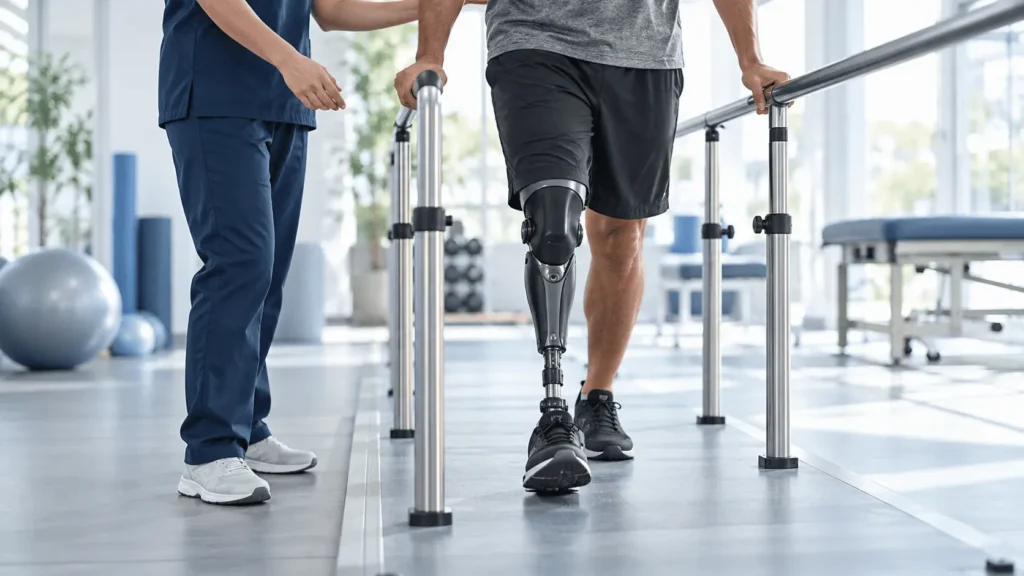
The specialist assesses:
- suspension of the prosthesis;
- pressure distribution;
- the condition of the skin;
- the position of the residual limb inside the socket;
- changes in volume;
- comfort during movement.
Where necessary, the prosthetic system is adjusted and modified.
What problems can occur with the residual limb
Most problems can be managed effectively if specialists are consulted in good time.
Possible complications include:
- prolonged or pronounced swelling;
- skin irritation;
- chafing;
- open wounds;
- inflammation;
- infection;
- a painful scar;
- heightened sensitivity;
- neuroma;
- contractures;
- chronic pain;
- difficulty keeping the prosthesis suspended;
- significant changes in residual limb volume.
The residual limb itself is not always the cause of discomfort when using a prosthesis. Sometimes the problem lies in the socket fit, the setup of the prosthesis or a change in tissue volume.
This is why, with recurring chafing, you should not simply try to «get used to» the pain — the cause needs to be identified.
When to see a doctor
Medical help is needed if the following appear:
- increasing pain;
- pronounced redness;
- unusually hot skin;
- discharge from the wound;
- pus;
- unpleasant odour;
- increased swelling;
- separation of the surgical wound;
- bleeding;
- a change in skin colour;
- a wound that does not heal;
- a rise in body temperature together with signs of inflammation;
- damage to the residual limb after a fall or injury.
Signs of infection may include redness, tenderness, a rise in skin temperature, discharge and increased swelling.
Patients with diabetes, vascular disease or impaired sensation need to monitor the condition of their skin especially closely.
Is prosthetic fitting possible with a difficult residual limb
In many cases — yes.
Modern prosthetics is not limited to patients whose residual limb has a «standard» shape.
Specialists work with patients:
- after high-level amputations;
- after traumatic amputations;
- with a short residual limb;
- after repeat surgery;
- with an unusual residual limb shape;
- after bilateral amputations;
- with complex scarring and other tissue characteristics.
In such situations a custom socket design, the right choice of suspension system and comprehensive rehabilitation are especially important.
Whether prosthetic fitting is possible, and how it should be approached, is determined by specialists after examining the patient.
Why the socket is so important
The socket is one of the key elements of a prosthesis.
It is inside the socket that the residual limb sits.
The socket must:
- hold the residual limb securely;
- distribute the load correctly;
- take anatomical features into account;
- allow the prosthesis to be controlled;
- avoid excessive pressure on sensitive areas;
- provide stability during movement.
Even the most advanced feet, knee units or electronic components cannot do their job properly if the residual limb sits uncomfortably in the socket.
This is why making a prosthesis always starts with a careful assessment of the residual limb.
Rehabilitation after amputation is more than just a prosthesis
The prosthesis is only one part of recovery.
Comprehensive rehabilitation may include:
- the work of a physical and rehabilitation medicine physician;
- physiotherapy;
- therapeutic exercise;
- occupational therapy;
- training in how to use the prosthesis;
- balance training;
- gait training;
- scar work;
- pain management;
- psychological support;
- adaptation to everyday and occupational demands.
With an upper limb amputation, much attention is given to restoring self-care skills and learning to control the chosen prosthesis.
With a lower limb amputation, one of the main goals is restoring safe standing, balance and walking.
Frequently asked questions about the residual limb after amputation
How long does a residual limb take to heal after amputation?
The recovery time is individual. It depends on the reason for the amputation, the level of surgery, the state of the blood vessels and tissues, the patient’s general health and any co-existing conditions.
For this reason, going by the number of days or weeks since surgery alone is not the right approach.
Why does the residual limb get smaller?
After an amputation the postoperative swelling gradually subsides and the soft tissues adapt to the new conditions. That is why the volume of the residual limb can change noticeably during the first months.
Does the residual limb need to be bandaged?
Compression therapy is indeed used to control swelling and shape the residual limb. However, the method of compression must be prescribed and demonstrated by a specialist. Incorrect bandaging done on your own can create uneven or excessive pressure.
Can the residual limb be massaged?
Once the wound has healed completely, massage and scar work may be part of the rehabilitation programme. Such procedures should only begin with the permission of the treating specialist.
Why has the prosthesis started to chafe when everything used to be fine?
One possible reason is a change in the volume of the residual limb. The socket or other components of the prosthesis may also need adjusting.
If the chafing keeps coming back, you need to see your prosthetist.
Is it normal to feel the amputated arm or leg?
Phantom sensations after amputation are common. A person may feel the position or movement of the part of the limb that is missing.
If these sensations come with significant pain, this should be discussed with a doctor.
Is prosthetic fitting possible with a short residual limb?
Whether a prosthesis can be fitted depends on more than the length of the residual limb. The level of amputation, the condition of the tissues and joints, muscle strength, skin condition and the patient’s functional abilities are all taken into account.
With an unusual or short residual limb, an individual assessment by the prosthetist and the rehabilitation team is required.
What should I do if a sore appears on the residual limb?
You should temporarily remove whatever is traumatising that area and consult a specialist. It is especially important not to keep using the prosthesis through pain or over clearly damaged skin without finding out the cause.
The key things to know about the residual limb after amputation
The residual limb, or stump, is the part of the arm or leg that remains after an amputation.
Its condition plays a key role in the prosthetic fitting that follows.
After surgery the residual limb changes gradually: the wound heals, the swelling subsides, the scar forms and the volume of the tissues changes.
Successful preparation for prosthetic fitting depends on:
- proper skin care;
- swelling control;
- prevention of contractures;
- maintaining joint mobility;
- strengthening the muscles;
- desensitisation;
- physical rehabilitation;
- regular assessment of the residual limb by specialists.
Even a complex residual limb shape or a high level of amputation does not in itself mean that a prosthesis is impossible. Modern prosthetic technology makes it possible to develop individual solutions for a very wide range of clinical situations.
The main goal is not simply to make a prosthesis, but to ensure that the person can use it safely and as functionally as possible in everyday life.